For 27 years, the story of Pan African Bank PLC remained buried in CBN examination vaults. Today, as the Nigeria Deposit Insurance Corporation (NDIC) announces an additional N16.18 billion in liquidation dividends for depositors of 20 failed banks, Rivers people who lost fortunes in their own state-owned bank may finally get justice.
But how did a bank created to rebuild Rivers State end up needing N702 million just to stay alive?
This is the full story.
I. THE DREAM: DIETE-SPIFF’S ECONOMIC RECONSTRUCTION
The Pan African Bank was not a private idea. It was a state project.
It was established in 1971 as part of an economic reconstruction plan set in motion by the military government of Commander Alfred Diete-Spiff, the first Military Governor of Old Rivers State. Diete-Spiff, now the Amanyanabo of Twon-Brass in Bayelsa State and one of Nigeria’s most revered traditional rulers, wanted an indigenous financial institution to drive the economy of the newly created Rivers State.
At a time when banking in Nigeria was dominated by foreign and Lagos-based banks, Pan African Bank was to be Rivers State’s financial muscle. The Rivers State Government held considerable financial interest. For its people, it was a symbol of pride.
It commenced operations in 1971 and for a decade, it looked like the dream would work.
Behind the scenes, trouble was brewing from the early 1980s.
II. THE FIRST CRACK: 1985 – WHEN EVERY MANAGER WAS SENT HOME
By 1983, the bank’s total deposits stood at approximately N189 million. But deposits rose and fell erratically every other year. It had no stability.
In March 1985, something unprecedented happened that should have alarmed everyone. Almost the entire management staff of the bank was sent on compulsory leave.
The bank was in a management crisis. Its operations were crippled. By 1986, it was hit by a severe liquidity crisis that nearly killed it.
The shareholders — led by the Rivers State Government — tried to save it.
First, they procured a N200 million loan from the Federal Government and on-lent it to the bank to redeem its overdrawn account with the CBN, reduce credits to government contractors, and shore up its capital base.
Second, after rejecting the idea of hiring a foreign Managing Director due to cost, they appointed a consultancy company, AVC Fund Limited, on 17 March 1987 as Financial Adviser and Technical Manager on a three-year contract.
AVC Fund was given a grand four-phase reorganization plan: Rebuild management and internal controls between March-December 1987, privatize the bank in 1988 by reducing government shareholding to 25%, and quote it on the Nigerian Stock Exchange in 1989.
It failed.
III. THE VERDICT OF THE REGULATORS
The Central Bank of Nigeria and NDIC were watching. Their examination reports between 1988 and 1996 tell a story of horror.
A joint CBN/NDIC Special Examination as at 31 July 1990 concluded bluntly:
“The Technical Manager lacked the necessary qualification, experience and exposure to undertake the task of turning the bank into a profit-making institution, and that the privatization plan was not feasible, given the bank’s deteriorating financial condition.”
The report said: “The bank’s financial condition remains unsound. The bank exhibits insolvency characteristics such as accumulated losses, negative net-worth, and large volume of irrecoverable credits.”
Yet, AVC Fund remained in place until March 1993 — three years beyond its initial contract.
What did the examiners find year after year?
Every single Bank Examination Report from 1988 to 1996 found significant deficiencies that were never fixed.
The CBN listed them:
- Lack of a lending policy
- Lack of specific authorized lending limits for officers
- Lack of adequate project appraisal
- Lack of adequate supervision of bank branches
- Non-functional inspection department
- Lack of effective internal control
- Lack of adequate number of experienced staff
- Poor credit administration
- Quota-based recruitment causing over-staffing
The result was predictable: Over-lending, fraud, and regulatory impunity.
The bank’s loans and advances to deposits ratio averaged 130% between 1988-1992 — meaning it was lending 30% more than it had. In 1988 alone, it was 110%. It was funding long-term loans with short-term expensive money market funds — a classic asset-liability mismatch.
When examiners recommended N101 million in loan-loss provisions in 1990, the Board argued it was excessive and provided only N62 million, declaring “paper profits” to hide accumulated losses.
IV. THE NUMBERS THAT KILLED A BANK
This is where the collapse becomes undeniable. Look at the financial decay:
Income & Loss:
Average annual expenditure rose from N35.3 million (1983-87) to N126.7 million (1988-92) to N252.6 million (1993-96). The bank accumulated losses of N660.9 million. Average annual loss jumped from N9.7 million to N30.4 million, then to N107.7 million in the final period.
Capital Erosion:
This is the most damning statistic.
- As at 31 August 1988: Shareholders fund N23.1m, Adjusted Capital minus N69.5m, Capital/Risk Asset Ratio -3.2%
- July 1990: Adjusted Capital minus N75.4m, needed N101.1m to meet 7.25% minimum
- 1992: Adjusted Capital minus N143.6m, needed N217m fresh capital
- July 1994: Adjusted Capital minus N428m, Risk-Weighted Ratio minus 120%, 74.5% of loans classified as bad, needed N478m
- April 1996: Adjusted Capital minus N556.3m, Risk-Weighted Ratio minus 288%, 77.4% of loans classified as bad, needed N702 million
From needing N101 million in 1990 to needing N702 million in 1996 — in just six years, the hole grew sevenfold.
Between July 1994 and April 1996 alone:
- Deposit liabilities fell by 30.6%
- Liquidity Ratio fell from minus 9.99% to minus 23.12%
- The bank lost over N32.3 million to reported cases of fraud
- The NDIC 1996 report noted: “Executive Management failed to exercise necessary prudence… Much of the funds realized were used up in overhead expenses rather than in paying depositors; and the Executives ill-advisedly gave themselves substantial furniture allowances for four years in advance.”
V. WHY IT FAILED: THE THREE CULPRITS
The official CBN case study blames three layers of actors — the owners, the board, and the management.
1. The Owners (Shareholders):
The shareholders failed in two critical duties: to provide adequate capital and to endow the bank with competent management. Fresh capital injection recommendations were ignored. They also failed to repay debts owed directly by them or guaranteed by them, and allowed substantial government-guaranteed facilities to remain outstanding. When government and parastatals suddenly withdrew deposits in 1989, liquidity collapsed.
2. The Board of Directors:
The Board was frequently not constituted at all. When it existed, there was no continuity. It continually referred routine policy matters to shareholders, causing fatal delays. Incapacitated to do its real job, it strayed into management matters. Most damaging: CBN documents that “members of the Board became recalcitrant debtors to the bank. The ex-directors of the bank who were indebted to it refused to fulfill their debt service obligations.”
3. The Management:
CBN stated: “The bank lacked a strong and effective Management from its inception in 1971.” The 1985 mass compulsory leave, the failed AVC Fund experiment, and the refusal to implement every recommendation — establish a Credit Committee, Assets & Liabilities Committee, restructure Credit Department, improve manpower and accounting — meant management incompetence became a key cause of failure.
VI. THE HUMAN COST: BEYOND N702 MILLION
Figures don’t tell the full devastation.
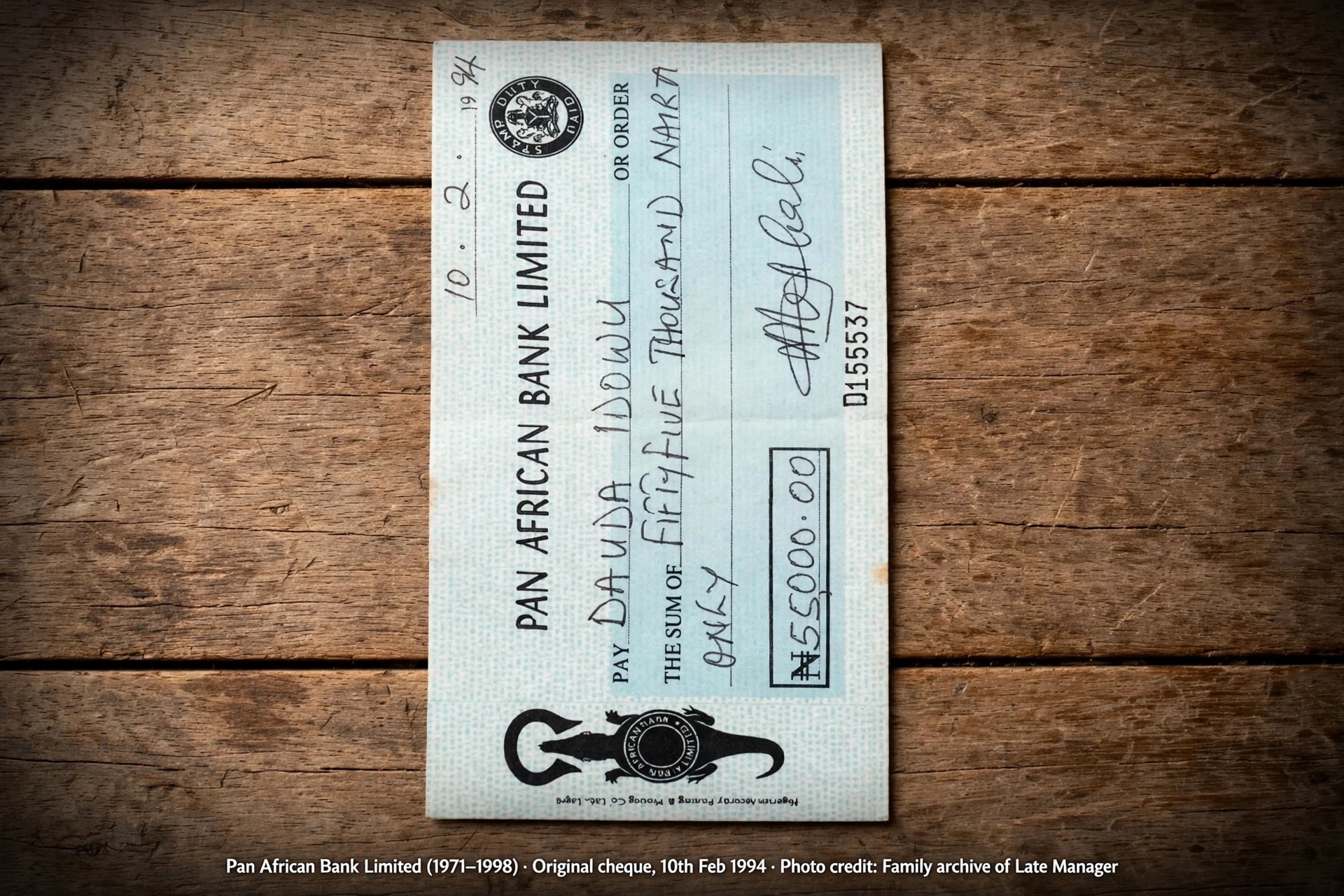
At its peak, Pan African Bank was in every corner of Old Rivers State. From Brass to Opobo, from Omoku to Buguma, the green logo meant something. In Lagos Island and Kaduna, it told the story of a Rivers State that could compete nationally.
It gave employment to thousands. For many households in Port Harcourt, Omoku, Ahoada, Yenagoa, Degema, the bank was the difference between school fees and dropout.
Then January 16, 1998 came.
CBN revoked the license. Doors locked. Staff were told to go home.
There was no structured severance for many. No psychological support. Breadwinners who had spent 10, 15, 20 years building the bank from scratch suddenly had no income. Families that depended on that salary spiraled.
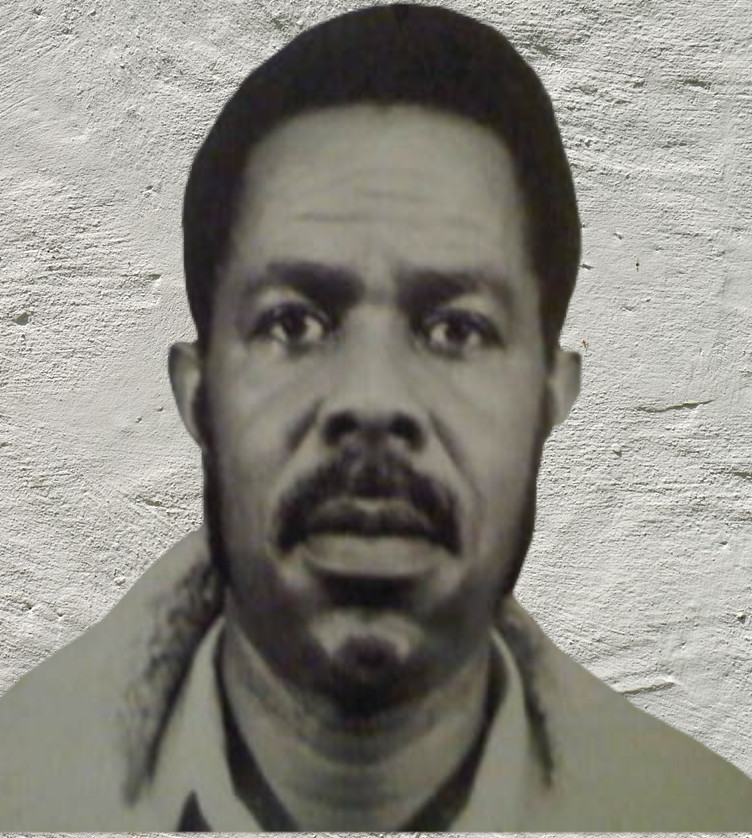
You hear it still in Ogba/Egbema/Ndoni, in Omoku — stories of men who never recovered from the shock, who fell into affliction and died untimely. Your late father establishing the Omoku branch and what happened after is not an isolated story — it is the story of hundreds of families across Rivers and Bayelsa who paid for the sins of shareholders, boards, and managers who treated the bank as personal purse.
That is why this new NDIC N16.18 billion liquidation dividend is not just banking news. It is closure.
And a tribute you can add at the end:
This article is dedicated to the staff of Pan African Bank PLC, especially those who established branches like Omoku with bare hands, and to the families who bore the trauma after 1998. Including my late father.
VII. THE END AND THE NEW HOPE
The failure of regulator-imposed self-restructuring (1990-1993) led to Phase 2: Regulatory Take-Over in May 1993. An Interim Management Board (IMB) responsible to NDIC was constituted. It failed to stop the rot.
The IMB was dissolved in March 1995 and replaced by a Transitional Supervisory Board (TSB) of CBN and NDIC personnel. Its job was to protect assets and recover debts. It also failed.
Liquidation became inevitable. On 16 January 1998, CBN revoked the licenses of 26 banks, including Pan African Bank.
NDIC became liquidator, obtained winding-up orders, paid N360.745 million in insured deposits in full. As at 31 December 2011, recoveries were N667.93 million from loans and N350.25 million from physical assets. Uninsured deposits were fully paid, with N251.84 million for creditors and N293 million for shareholders declared as liquidation dividends.
Now, 27 years after closure, the NDIC has so far received N61.63 billion as liquidation dividends from 20 failed banks, and expects an additional N16.18 billion. As NDIC Director Bashir Nuhu clarified on November 13, 2023, no operating bank has been closed — these are legacy banks closed between 1994 and 2018.
For Rivers State, this is more than money. It is the final chapter of an economic dream started by Alfred Diete-Spiff, destroyed by political interference, owner apathy, board indiscipline, and management failure.
Under Governor Siminalayi Fubara’s administration, victims are hopeful. It is not clear if the Rivers State Government itself, as major investor, will be a beneficiary.
What victims should do: Visit NDIC’s claim portal or Port Harcourt zonal office with evidence of deposit, share certificate, or creditor proof. If documents are lost, swear an affidavit.
Pan African Bank is a textbook case of how not to run a state-owned bank. As World Bank studies show, state-owned banks fell from 67% of banking assets in 1970 to 22% in 2009 globally because of this exact principal-agent problem — where the people are the ultimate owners but have no real control, and their agents have no personal stake.
The bank is dead. Its lessons must not be.
Sources / References:
- CBN/NDIC (2012). Case Study of Pan African Bank Limited, Volume 1 – Causes and Resolution.
- CBN (1990). Pan African Bank: Special Examination Report, CBN, Lagos.
- CBN (1996). Pan African Bank: Routine Examination Report, CBN, Lagos.
- NDIC (1994). Pan African Bank: Routine Examination Report, NDIC, Abuja.
- Uke, Uke N. (2023). Bank Collapse: Sorting Out Victims of Rivers Owned Pan African Bank, PHC Telegraph.