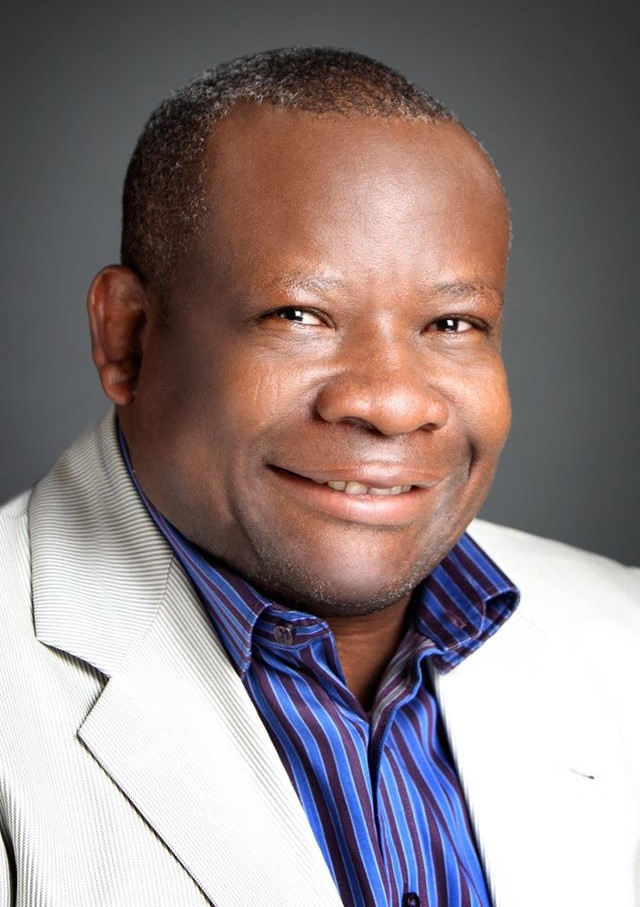
Lawyer | Environmental Activist | Policy Strategist | Niger Delta Advocate
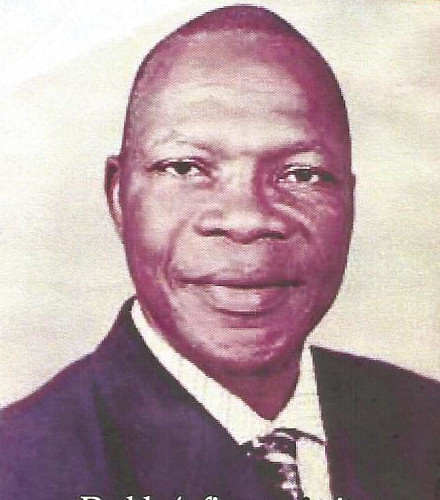
Oronto Natei Douglas was one of the most courageous voices to emerge from the Niger Delta—an accomplished lawyer, internationally respected environmental activist, policy strategist, and public servant whose life was defined by an unyielding commitment to justice, equity, and human dignity.
Early Life and Background
Oronto Natei Douglas was born on August 6, 1966, in Okoroba, Nembe Local Government Area of present-day Bayelsa State, Nigeria. He grew up in a region deeply scarred by environmental degradation caused by decades of oil exploration, a reality that would profoundly shape his worldview and life’s mission.
He was raised by his parents, Mr. Obebara Douglas and Mrs. Igoni Douglas, who instilled in him strong values of discipline, resilience, and advocacy. From an early age, Douglas demonstrated a deep sense of justice and empathy for marginalized communities.
Education and Intellectual Formation
Douglas began his early education at Army Children School, Alamala, Abeokuta, Ogun State, before proceeding to United Comprehensive High School (UCHS), Wasimi, Abeokuta, in 1978.
During his secondary school years, his leadership qualities became evident when he served as Deputy Senior Prefect between 1982 and 1983, a role that helped nurture his early organizational and leadership abilities.
In 1987, he gained admission into the Rivers State University of Science and Technology (RSUST), where he studied Law (LL.B Hons). While at RSUST, Douglas’s journey into activism began in earnest. He served as National Mobilization Officer of the National Union of Izon-Ibe Students, under the leadership of President Cassidy Okilolo, where he mobilized youth consciousness around identity, justice, and regional development.
After completing his law degree, he proceeded to the Nigerian Law School, Lagos, and was called to the Bar in 1992, earning his Barrister-at-Law (BL) qualification.
Driven by intellectual curiosity and a desire to deepen his advocacy, he later became a Chevening Scholar, studying in the United Kingdom from 1995 to 1997, where he obtained a Master’s degree in Environmental Law from De Montfort University, Leicester.
Rise to Activism and Global Recognition
Douglas rose to international prominence in the mid-1990s as part of the legal team defending Ken Saro-Wiwa and the Ogoni Nine during their controversial trial under the military regime of General Sani Abacha (1994–1995).
As one of the youngest lawyers on the team, his involvement in the case exposed him to the brutal realities of state repression. The eventual execution of Saro-Wiwa and his colleagues, despite global condemnation, marked a turning point in Douglas’s life, hardening his resolve to fight environmental injustice and human rights abuses.
He went on to co-found Environmental Rights Action/Friends of the Earth Nigeria (ERA/FoEN), a leading environmental advocacy organization committed to grassroots mobilization and ecological justice.
Douglas was also a key figure in the Chikoko Movement, a pan-Niger Delta coalition advocating resistance against exploitation and environmental degradation in oil-producing communities.
His advocacy transcended national boundaries. In 1999, he became the first Niger Delta activist to be hosted at the White House during the administration of U.S. President Bill Clinton, where he presented the case of environmental injustice and human rights violations in the Niger Delta to a global audience.
Public Service and Political Engagement
Douglas transitioned into public service in 2004, when he was appointed Commissioner for Information and Strategy in Bayelsa State by then Governor Chief Diepreye Solomon Peter Alamieyeseigha.
Following the political crisis that led to Alamieyeseigha’s impeachment in 2005, Douglas resigned his position in principle.
In 2007, he joined the administration of Dr. Goodluck Ebele Jonathan, first as Vice President and later as President of Nigeria. Douglas served as Special Adviser on Research, Documentation, and Strategy, where he played a pivotal role in policy development, governance strategy, and the articulation of Niger Delta issues at national and international levels.
Personal Tragedy and National Shock
A deeply tragic moment occurred on December 15, 2012, during the funeral of his father in Okoroba. A Nigerian Navy Agusta helicopter (NN07) crashed shortly after takeoff, killing six prominent Nigerians, including:
- Governor Patrick Yakowa of Kaduna State
- General Andrew Owoye Azazi, former National Security Adviser
- Dauda Psokho, Kaduna politician
- Commander Muritala Mohammed Daba (pilot)
- Lt. Col. Adeyemi O. Sowole (co-pilot)
- Warrant Officer Kamal Mohammed
The incident deeply shook the nation and left Douglas grieving amid unimaginable loss, further strengthening his resolve to pursue justice and meaningful change.
Intellectual Contributions and Cultural Advocacy
Douglas was not only an activist but also a cultural and intellectual promoter. He invested in knowledge development and supported literary and artistic initiatives across Nigeria.
He founded community libraries, including the Prof. E.J. Alagoa Community Library in Yenagoa, aimed at promoting reading culture and intellectual growth.
He also played a significant role in supporting the Nigerian creative industry, particularly Nollywood and the Africa Movie Academy Awards (AMAA).
One of his landmark contributions was his involvement in securing UNESCO recognition of Port Harcourt as the World Book Capital in 2014, a historic milestone in Nigeria’s cultural and literary history.
Health Challenges and Final Years
In 2008, Douglas was diagnosed with stomach cancer, a condition he battled quietly while continuing his advocacy, public service, and intellectual engagements. Despite his deteriorating health, he remained active and committed to national development and Niger Delta advocacy.
Death and Legacy
Oronto Natei Douglas passed away on April 9, 2015, at the age of 48, bringing to an end a life of extraordinary courage and impact.
He is survived by his wife, Tari Douglas, and their two sons, Ogiel and Daniel.
Enduring Legacy
Oronto Douglas’s legacy is profound and enduring:
- A fearless advocate for environmental justice
- A global voice for the Niger Delta struggle
- A policy strategist who influenced governance at the highest level
- A champion of education, culture, and intellectual development
Though his life was cut short, his influence continues to inspire activists, policymakers, and scholars across Nigeria and beyond.
He remains a symbol of resistance, courage, and visionary leadership—a man who stood firmly for justice in the face of overwhelming odds, and whose voice still echoes in the ongoing struggle for equity in the Niger Delta.


1 thought on “Oronto Natei Douglas (1966 – 2015)”