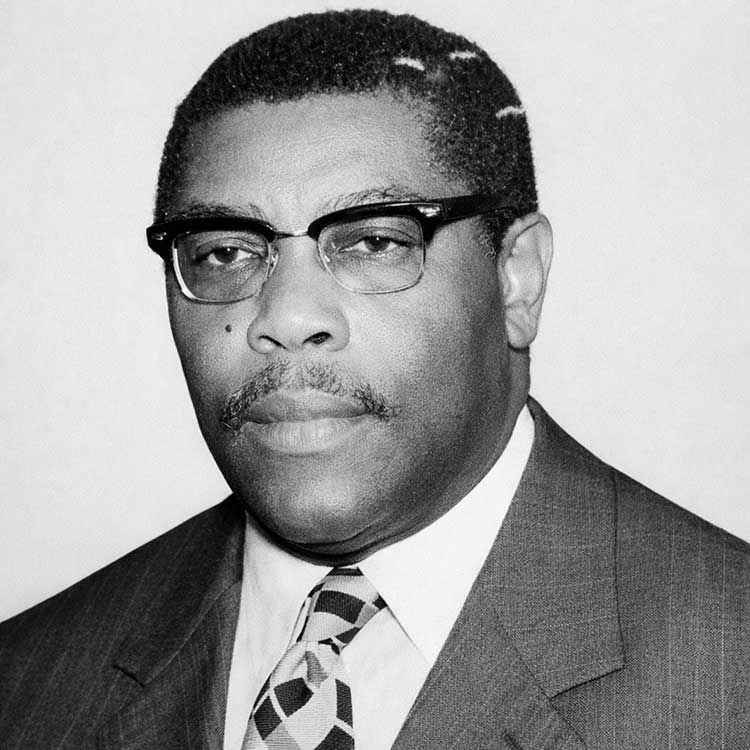
In the story of Nigeria’s legal and political evolution, few names resonate with as much gravitas as Alabo (Dr.) Nabo Bekinbo Graham-Douglas, SAN. A towering figure in intellect and stature, he embodied resilience, innovation, and service during one of the nation’s most turbulent eras. His career spanned regional and federal leadership, and his principles helped shape the foundations of justice in modern Nigeria.
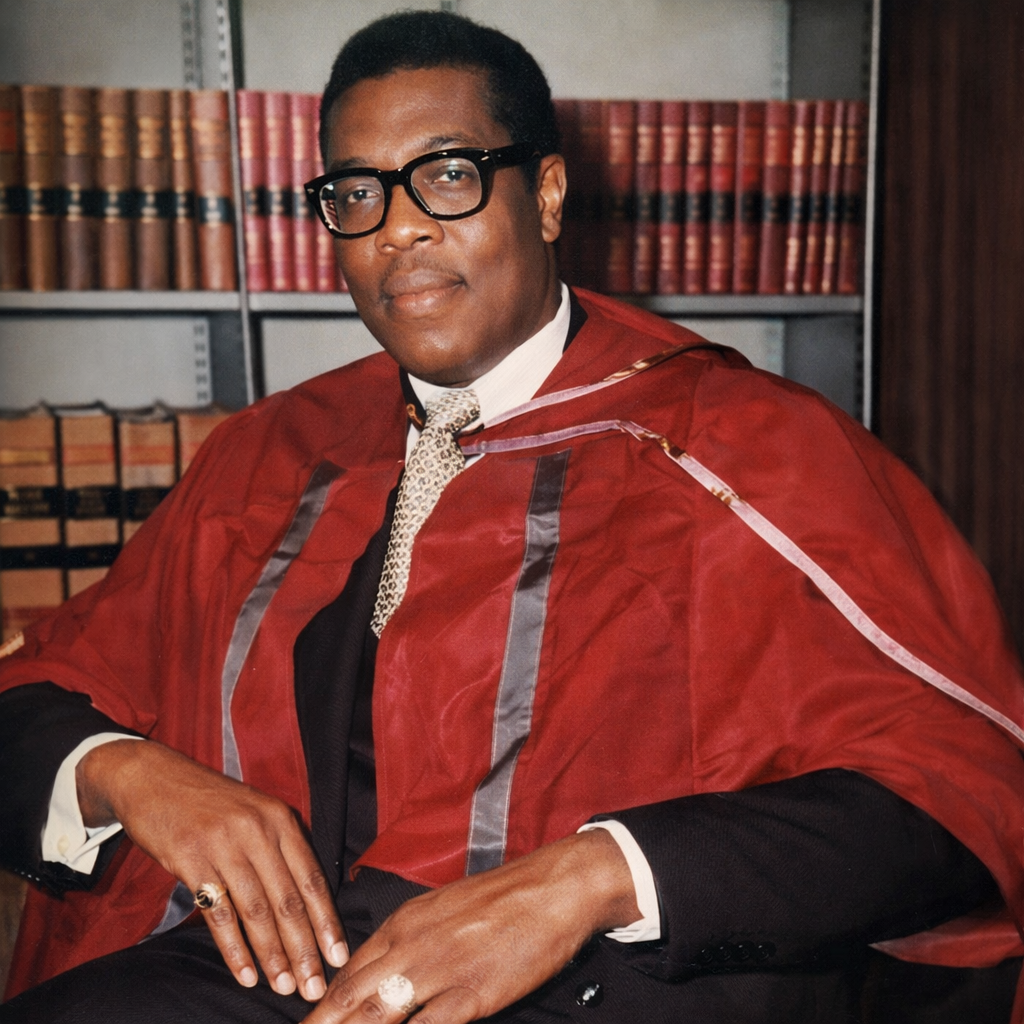
Origins and Early Life
Born on July 15, 1926, in Abonnema, Rivers State, Graham-Douglas hailed from a distinguished lineage. His grandfather, Chief Orubibi — popularly known as Douglas — was one of the eleven founding merchant war chiefs of Abonnema in 1882. This heritage of leadership and courage deeply influenced his worldview. His father, Graham, and his mother, Madam Botoba Bekinwari from Buguma, instilled discipline, humility, and a sense of duty. Growing up in a family steeped in service, young Nabo absorbed values that would later define his professional life.
He began his education at Nyemoni Primary School in Abonnema, then attended Kalabari National College in Buguma. His brilliance carried him abroad to Exeter University in England, followed by King’s College, University of London, and the Institute of Advanced Legal Studies in London. On November 23, 1954, he was called to the Bar, marking the start of a career that would leave an indelible mark on Nigeria’s legal landscape.
Breakthrough Work and Achievements
Returning to Nigeria, Graham-Douglas quickly established a reputation for sharp legal arguments and professional integrity. His private practice flourished, and he became one of the most respected lawyers in the years following independence. His rise coincided with Nigeria’s political upheavals, and his skills soon drew him into public service.
In 1966, after the first military coup, he was appointed Attorney General of Eastern Nigeria, succeeding Dr. Christopher Mojekwu. His tenure coincided with mounting tensions that led to the Nigerian Civil War. Unlike many of his contemporaries, Graham-Douglas opposed secession, believing firmly in the unity of Nigeria. His refusal to endorse the Republic of Biafra led to his resignation in September 1967, a decision that carried personal risk — he was briefly detained by Biafran authorities for his stance. This act of courage underscored his resilience and devotion to principle.
With the creation of Rivers State in 1967, Graham-Douglas was appointed its first Attorney General and Commissioner for Justice. In this role, he laid the foundations of the state’s legal institutions, guiding it through reconstruction after the war. His influence extended beyond Rivers State when, in 1972, General Yakubu Gowon appointed him Federal Attorney General and Commissioner for Justice. As Nigeria’s chief law officer, he advised on constitutional matters, strengthened the justice system, and helped shape the country’s legal framework during a fragile post-war era. His tenure lasted until the coup of July 1975, after which he returned to private practice.
Philosophy and Mindset
What distinguished Graham-Douglas was not only his legal brilliance but his philosophy. He believed the rule of law was the soul of a nation, and he lived by that creed. His towering height — 7 feet 5 inches — made him physically imposing, but it was his moral authority that commanded respect. In one memorable cabinet meeting in Rivers State, he compelled the military governor to apologize to his colleagues after a heated exchange, demonstrating his courage and insistence on fairness even in the face of power.
His mindset was rooted in service. He saw law not as a tool for personal gain but as a framework for justice, unity, and national progress. His innovation lay in building institutions that could endure beyond individuals, ensuring that justice was not dependent on personalities but on systems.
Standing Among Nigeria’s Foremost SANs
His stature was recognized nationally when he was named among the Top 5 foremost Senior Advocates of Nigeria (SAN) — a rare distinction shared only with Chief F.R.A. Williams, Chief Obafemi Awolowo, Chief R.A. Fani-Kayode, and Mr. I.A. Bankole-Oki. This honor placed him in the company of Nigeria’s greatest legal minds, underscoring his role as both a pioneer and a guardian of the nation’s conscience.
Personal Life and Family
Beyond the courtroom and cabinet, Graham-Douglas lived a life enriched by family. He married Miss Kofo Moore, an Oxford-educated lawyer and daughter of Eric Moore, the first Lagos member of the Nigerian Legislative Council. She was not only his partner in intellect but also a woman of deep faith. Kofo later became a passionate member of the Redeemed Christian Church of God, where she was a formidable supporter of the church’s growth, blending her legal training with spiritual devotion and service.
Nabo was also part of a remarkable family whose members left their mark on the Niger Delta and Nigeria. His siblings included:
- Melford Graham-Douglas, the first son.
- Donald Graham-Douglas, who became the second Chief Justice of old Rivers State.
- God Knows Graham-Douglas, the fourth son.
- Alabo Tonye Graham-Douglas, who served as a Commissioner in old Rivers State and later as a Federal Minister under multiple governments.
Together, the Graham-Douglas family became synonymous with leadership, resilience, and service.
Legacy
Nabo Graham-Douglas passed away on December 18, 1983, at the age of 57. Yet his legacy endures. His chambers in Port Harcourt remain a landmark, a silent witness to his intellect and service. More significantly, the Nabo Graham-Douglas Campus of the Nigerian Law School in Port Harcourt bears his name, ensuring that every new generation of lawyers carries forward his legacy of excellence and integrity.
Closing Reflection
Nabo Graham-Douglas was more than a jurist; he was a guardian of Nigeria’s conscience. His life demonstrated that resilience in adversity, innovation in institution-building, and service to nationhood can shape history. He remains a monument in Nigeria’s legal and political consciousness — a man whose intellect, humility, and devotion to justice defined an era.
He lived as proof that one individual, armed with principle and courage, can safeguard the soul of a nation.
References / Sources
- Mr. DiePiriye Godwin Alabraba (oral and historical accounts)
- Wikipedia – Nabo Graham-Douglas




1 thought on “Nabo Graham-Douglas: A Life of Resilience, Innovation, and Service”