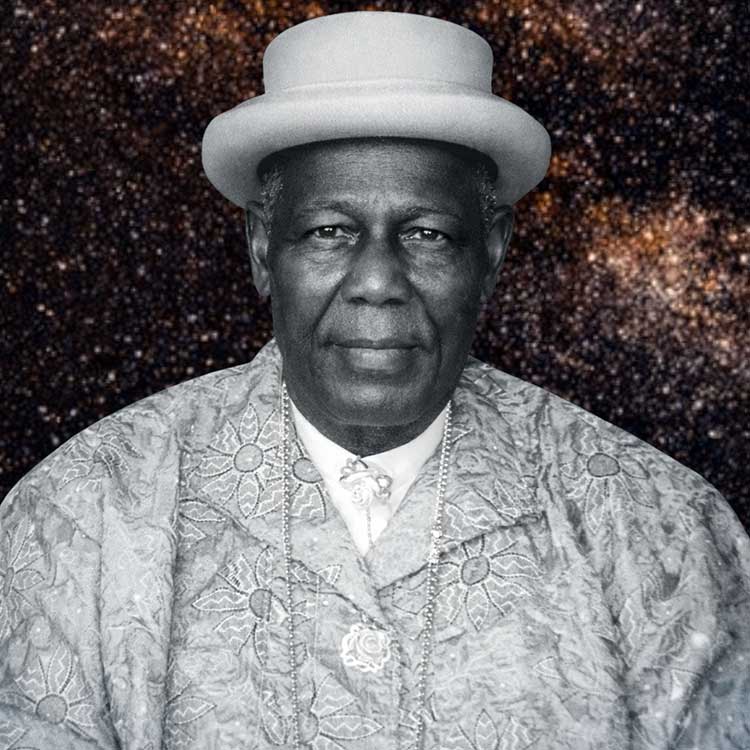
Diplomat, Professor, Administrator
Lawrence Baraebibai Ekpebu was a distinguished professor and diplomat from the Niger Delta region of Nigeria. He holds the distinction of being the first African graduate of Harvard University in the United States. Notably, he played a crucial role in the infrastructure development of the old Rivers State.
Early Life and Education
Lawrence Baraebibai Ekpebu was born on May 2, 1935, in Okoloba village in the Kolokuma/Opokuma area of present-day Bayelsa State to an itinerant rural fisherman, Chief Naupa Baraebibai Opukpapu Ekpebu.
His mother’s name was Mary Geku, the second in an array and beautiful parade of four wives. His grandmother was from Opokuma. The queer circumstances that circumscribed his birth pointed to the great destiny that beckoned.
The first wife and Larry’s mother had been pregnant but lost their babies. So, when his mother was pregnant with Larry, there wasn’t much hope.
But surprisingly, like the late Archbishop Benson Idahosa revealed in his book, Fire in His Bones, how he was abandoned at a garbage heap but miraculously survived, Larry, by a masterstroke of destiny, braced the odds and survived, becoming the first male child of his father.
Like Joseph in the Bible, it was only a matter of time before he became the torchbearer and shouldered the burden of the entire family. His father, like Jacob, observed him very closely and noticed early enough that Larry was a precocious child.
According to Etekpe Ambily et al. (supra), Chief Naupa Baraebibai Opukpapu Ekpebu, therefore, made frantic efforts to get a job in order to provide for his family as a responsible father. It paid off not long afterwards as he landed a job with the British Merchant Navy, where he worked for about 50 years, traveling on the high seas and oceans.
Chief Naupa Baraebibai Opukpapu Ekpebu retired in 1967 and lived in Manchester, England, then Lagos, and finally Port Harcourt. He died at the age of about 126 years. This is why many believe Larry, his first son, should not have gone home so soon.
No doubt, his father’s struggles galvanized Larry’s propensity and penchant to face the vicissitudes and vagaries of life with resilience, determination, diligence, discipline, and doggedness targeted at carving a respectable and admirable niche. Thus, at age 9, Larry was already climbing palm trees, cutting palm fruits, farming, and hunting.
It was about this time that he started his primary education, first at Sabagreia in 1943, Opokuma Group School, Opokuma, in 1945, and finally completing his primary education at Reverend Proctor Memorial School, Kaiama, in 1948.
The schools at Sabagreia, Opokuma, and Kaiama were run by the Church Missionary Society (CMS). Most Fridays, Larry and his mates would have exhausted their pocket money and, in order to get home, they had to embark on labyrinthine journeys through sandbanks and in canoes along the River Nun, oftentimes sleeping by mosquito-infested riverbanks.
The educational setting during that period was, to say the least, unfavorable, with substandard boarding facilities, and Larry had to prepare his own meals. The beds, as noted by Etekpe Ambily et al. (2012), were constructed from sticks, and mats were used as makeshift bed sheets. However, akin to Pip, the narrator in Charles Dickens’ renowned work, Great Expectations, Larry persevered and pressed forward, gazing at the vibrant blue sky and harboring hope for a brighter future.
As Winston Churchill aptly observed, it is a mistake to look too far ahead, for only one link of the destiny chain can be handled at a time. There remains the power within us to rise above both imagined and real fears and bear the significant burdens that destiny places upon us.
Numerous destinies take shape in the crucible of affliction and adversity, and Larry’s destiny stands as a prime example. In Kaiama, he actively participated in the school band, football team, athletics, and excelled in Ijaw dances like Ayoropi and Masquerade.
Upon completing the First School Leaving Certificate Examination with flying colors in 1948, a major obstacle emerged. There was no secondary school in the Brass Division of the then Eastern Nigeria, preventing him from proceeding immediately to secondary education.
Although he was among ten bright pupils who undertook a perilous journey to Port Harcourt to write the common entrance examination for admission into the renowned Government College Umuahia, they were surprised to find that no results were sent to them due to the ethnic politics prevailing in the Eastern Region at that time.
Opting not to remain idle, Larry secured a position as a shopkeeper with the Christian Missionary Society Bookshop in Port Harcourt. However, he could not bring himself to commence work, as tears welled up in his eyes.
In October/November 1949, his mother, who then sold fish in Calabar, summoned him. Upon arrival, he discovered that admissions had concluded and classes were already in progress, leaving him astonished.
This challenging and disruptive period of painful hiatus instilled in him the virtues of courage and hard work in the face of adversity. Fortune smiled on him when his father returned to the country and, while in Lagos, sent for Larry to join him, aiming to secure a suitable placement for him in a reputable school.
Consequently, Larry enrolled in Ahmadiyya High School, Lagos, in 1950, after his father utilized his connections with the principal, an old friend. Larry successfully passed the entrance examination and spent four years at the school.
Remarkably, despite being a Muslim institution, there was no religious segregation or discrimination at the college. Muslim and Christian students studied together, enjoying equal opportunities to explore their worlds. This experience significantly influenced Larry’s philosophy, as he grew to become highly detribalized. He ascended to various leadership positions, becoming the school prefect, president of the school’s senior literary and debating society, captain of Allison House, president of the geographical society, secretary of the Bays Athletic Club, and captain of the swimming team. Such achievements were rare, especially in today’s schools tainted by religious bigotry, ethnic chauvinism, jingoism, and nepotism.
While at Ahmadiyya, Lawrence Ekpebu did a lot of fishing, including crab trapping, on a part-time basis, and sometimes he and his Urhobo friend, James Madagawa, bought and sold coconuts to improve their cash flow in Lagos. He also visited his uncle, Nicholas Ayangbo, regularly during holidays in a village in Ogun State, located several miles away, where they cut firewood, loaded it into big canoes, and paddled to Lagos to sell.
According to Ambily Etekpe et al. (supra), Larry Ekpebu often remitted the money he made from the sales to his mother and younger ones in the village for their upkeep.
In the words of Lawrence Ekpebu, as quoted in Etekpe Ambily et al.:
“My life in the village toughened me. I did not have anybody to help me. I hadn’t any hope, but I knew I wanted to go somewhere… My parents were disciplinarians. We were trained to be strong and kind. I was very kind and read letters to the folks in the villages. I translated Ijaw language into English and wrote letters for them. I fetched water, broke firewood, and listened to the elders in their meetings. I got a lot of blessings from these elders because of my humility and obedience. As I listened to them, I became vast in the philosophical sayings of my people, and it helped shape me in school. I am happy I grew up in that environment.”
By 1953, when he completed secondary school, another challenge reared its ugly head. This time, there was nobody to sponsor him to university.
His parents were poor, so he took the bull by the horns, dusted his G4 certificate, and secured employment with the defunct Post and Telecommunications Department, where he sorted letters at night. He later wrote and passed the Cambridge School Certificate and Civil Service Examination and was posted to the State Government House at Marina, Lagos, as a Third Grade Clerk. Clearly, this was orchestrated by God, as very few civil servants had the privilege of working at the State House.
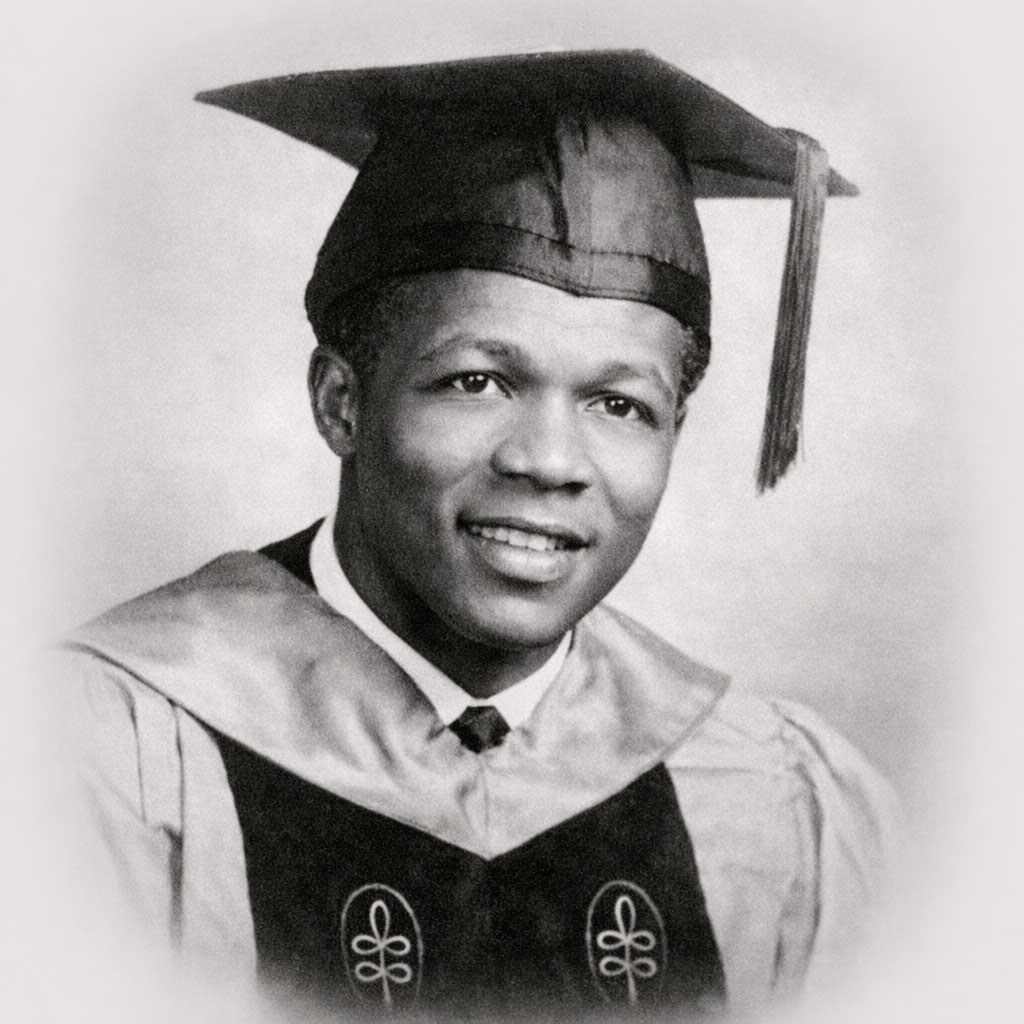
It was here that he met distinguished personalities such as Alhaji Shehu Shagari, Matiama Sule, A.C. Nwapa, Mazi Njoku, K.O. Mbadiwe, and Nwafor Orizu, amongst others who helped nurture and nourish his ambitions.
While at the State House, Larry applied to five universities in America, three of which offered him automatic admission based on his history, while two institutions — Harvard and Yale — required him to sit for an examination administered by the American College Board.
In time, he took the examinations with Harvard as his first choice. Harvard accepted him with a scholarship offer to study Political Science in 1956, where, as the first African graduate since the establishment of the university, he obtained his B.A. Honours with distinction in 1960.
Indeed, his decision to study at Harvard was greatly influenced by the dialectical postulations of Nnamdi Azikiwe, himself a Harvard graduate and a foremost nationalist at the time, as well as Kwame Nkrumah of Ghana and Mbonu Ojike, all Pan-Africanists who promoted the slogan, “Boycott all boycottables.”
Upon completing his studies at Harvard University, Lawrence Ekpebu’s insatiable thirst for knowledge led him to another prestigious institution, Princeton University’s Woodrow Wilson School of Public and International Affairs. There, he pursued a Master’s in Public Administration (MPA) and graduated with distinction in 1962, securing the distinction of being the first African graduate. Larry’s journey was marked by a series of pioneering achievements.
Eager to elevate his academic pursuits, he returned to Harvard, earning a Master of Arts (M.A.) degree and a Ph.D. in 1965. The challenges inherent in this program were formidable, yet Larry, much like Jacob serving Laban for ten years to marry Rachel, pressed on undeterred by the obstacles. His unwavering commitment to education, described by some as almost pathological, reflected a marriage to scholarship.
Reflecting on his academic journey, Professor Henry Kissinger, Larry’s professor of international politics at Harvard and subsequently America’s esteemed Secretary of State, served as a significant motivator. Larry’s exposure to influential professors like Professor Brzezinski, specializing in political theory and later becoming President Carter’s National Security Adviser, significantly shaped his worldview. Larry embraced a method of perceiving, predicting, and explaining cause and effect through flexible, independent, reflective thinking and real-world experiences. This stood in contrast to the conventional rote-learning approach prevalent in today’s university methodologies.
During his time at Harvard, Ambassador (Prof.) Lawrence Ekpebu was chosen for a one-year summer internship at the United Nations and another one-year internship at the international branch of Chase Manhattan Bank in New York in 1960 and 1961, respectively. The UN internship provided him with a keen understanding of the activities of the UN Security Council, General Assembly, and the Economic and Social Council.
His exceptional performance during the internships did not go unnoticed, earning him a special commendation letter from David Rockefeller, the President of Chase Manhattan Bank. In subsequent years, Larry returned to Harvard as a fellow of the Institute of International Affairs in 1978–1979 and later in 1996 as a fellow of the Harvard Kennedy School.
Throughout his undergraduate and postgraduate years at Harvard and Princeton, Larry received numerous scholarship awards, recognizing his outstanding character, leadership, scholarship, and athletic abilities. In June 1960, the year he earned his bachelor’s degree, he was honored with the Graduation Prize Scholarship of the university and the Francis H. Burr Scholarship. Notably, Larry remains the only African to have received the 119-year-old Francis H. Burr Scholarship.
Larry also benefited from research grants from Reader’s Digest and the African American Institute. An outspoken individual even as a student, Ambassador Lawrence Ekpebu’s unique characteristics set him apart.
Larry Ekpebu and his Kenyan friend, even at personal risk, published an article strongly condemning France’s detonation of an atomic bomb in the Sahara Desert. If he were alive today, given his outspoken nature, he might have similarly expressed condemnation or shared insights on ongoing conflicts like the Russian-Ukrainian war and the Israel-Hamas conflict.
Work Experience
Ambassador (Prof.) Lawrence Baraebibai Ekpebu began his professional journey shortly after completing secondary school in Lagos. From 1953 to 1956, he served as a Third Grade Clerk at the Office of the Council of Ministers, State House Marina, Lagos — a highly prestigious position at the time, especially for a young Nigerian from a minority background. Working within the corridors of power at such an early age exposed him to national leadership, governance, and administration, while nurturing the lofty ambitions that would later define his illustrious career.
Following his distinguished academic accomplishments in the United States, including his studies at Harvard University and Princeton University, Ekpebu was appointed Director of Student Affairs at the World University Service in Cambridge, Massachusetts, USA, between 1964 and 1965. In that capacity, he became a strong advocate for educational advancement in Africa, facilitating the distribution of books and academic materials to several African universities, including the Kenneth Dike Library at the University of Ibadan. His efforts significantly supported indigent African students and strengthened intellectual development across the continent.
Lawrence Ekpebu’s exceptional academic performance and exemplary conduct at Harvard also helped pave the way for increased admissions opportunities for Nigerians and other Africans at the university. He believed deeply in lifting others as he climbed, dedicating much of his life to creating opportunities for future generations.
In 1965, despite receiving offers from the University of Nigeria and the University of Lagos, he chose to return home and join the University of Ibadan as a Lecturer in Political Science. That decision reflected his profound commitment to national development and intellectual service to Nigeria.
At the University of Ibadan, Professor Ekpebu quickly distinguished himself as a brilliant scholar, disciplined administrator, and inspiring mentor. In 1965, he was appointed Assistant Warden of Independence Hall, and in 1968, he represented the university on the National Committee on International Human Rights Year. Over a remarkable academic career spanning more than thirty-five years, he occupied several strategic positions, including serving as Head of the Department of Political Science. He was also a Fellow at Harvard University’s Center for International Affairs, further reinforcing his standing as an internationally respected scholar.
Beyond the classroom, Ambassador Ekpebu played influential roles in intellectual and policy circles across Africa and the world. In 1970, he became a member of the Executive Board of the Pan African Journal, and in 1971, he was appointed to the Editorial Board of the Quarterly Journal of Administration. Between 1978 and 1981, he served as Associate Editor of ALTERNATIVES, a globally respected journal of world politics published in New York and New Delhi, and later became a member of its Board of Advisers in 1981.
His scholarly influence extended internationally through numerous academic engagements. He served as a Visiting Scholar at the University of East Africa, Makerere, Uganda; the University of Massachusetts, USA; and the University of Port Harcourt. He also functioned as an External Examiner for Ahmadu Bello University, Obafemi Awolowo University, and the University of Port Harcourt.
In addition, Professor Ekpebu served as an interviewer and examiner for the prestigious Commonwealth Scholarship Programme and was a nominator for the Parvin Fellowship at Princeton University’s Woodrow Wilson School of Public and International Affairs. Through these roles, he helped shape academic excellence, leadership development, and international scholarship opportunities for generations of scholars across Nigeria and Africa.
Throughout his career, Ambassador Lawrence Ekpebu embodied scholarship, discipline, service, and visionary leadership, leaving behind an enduring legacy in academia, governance, diplomacy, and Pan-African intellectual development.
Government Service
The remarkable academic and professional accomplishments of Ambassador (Prof.) Lawrence Baraebibai Ekpebu soon brought him into the spotlight of Nigeria’s military leadership during one of the most turbulent periods in the nation’s history. Consequently, in 1968, he was appointed the first Commissioner for Finance in old Rivers State under the administration of Alfred Diete-Spiff.
At the time news of his appointment reached him, Professor Ekpebu was in Kampala, Uganda, where he had been invited by Professor Ali Mazrui, then Head of Political Science at Makerere University, to deliver a paper titled “Cohesion and Fragmentation in African Politics: The Minorities and the Nigerian Crisis” at a conference organized by the Faculty of Social Sciences of the University of East Africa.
Earlier, he had delivered another influential lecture at the Seventh World Conference of Political Scientists, where he strongly criticized proponents of Biafra and argued passionately for the unity of Nigeria. His outspoken position during the Nigerian Civil War exposed him to grave danger, as his life came under serious threat for opposing secession.
At the time, there existed deep tensions between Brigadier Benjamin Adekunle, General Officer Commanding the 3rd Marine Commando and Administrator of Port Harcourt, and Governor Alfred Diete-Spiff. Professor Ekpebu, alongside Dr. Obi Wali and Ken Saro-Wiwa, played a crucial mediatory role in reconciling the two leaders in the interest of peace and stability.
As a committed Pan-Nigerian, Pan-African, and Pan-Niger Delta statesman, as well as an unapologetic advocate of true federalism, Lawrence Ekpebu boldly wrote to Colonel Chukwuemeka Odumegwu Ojukwu, insisting that secession was not the solution to Nigeria’s problems. This principled stand almost cost him his life, as he was branded “anti-Biafra,” and several attempts were allegedly made to eliminate him.
During his tenure in government, Professor Ekpebu became one of the principal architects of the economic and administrative foundations of old Rivers State. He leveraged his office to champion sustainable development and institutional growth in the newly created state.
He played a leading role in the establishment of key state-backed institutions such as Pan African Bank, RivBank Insurance Company, Delta Hotels, and the Pabod group of investment and commercial companies. He was also instrumental in the reactivation of the Electricity Corporation of Nigeria in the state, thereby creating employment opportunities and opening pathways for many notable Ijaw sons and daughters to excel in banking, commerce, and public administration.
In addition, he helped establish Treasury and Sub-Treasury offices across the state and contributed immensely to building the physical, administrative, and social infrastructure required for effective local government administration. He also drafted several tax laws and regulatory frameworks that provided the legal and institutional foundation necessary for the successful takeoff of Rivers State.
One of his most visionary policy contributions was his memorandum advocating the “Creation of More Divisions,” which eventually led to the establishment of eighteen additional divisions in Rivers State. In recognition of his exceptional contributions, Governor Alfred Diete-Spiff reportedly described Lawrence Ekpebu as “a backbone” of his administration and one of the greatest contributors to the growth of the state.
Many of the administrative and developmental structures pioneered in old Rivers State were later adapted by Bayelsa State following its creation in 1996. Significantly, Professor Ekpebu again played a prominent role in helping to deploy these tested governance frameworks to accelerate development in the new state.
His contributions to the industrial and agricultural transformation of Rivers State were equally monumental. He was instrumental in securing World Bank-backed investments that led to the establishment of Risonpalm, then regarded as the largest oil palm plantation in Africa, with a major outpost at Oruma in present-day Bayelsa State. Sadly, much of this once-thriving agricultural investment has since faded into decline.
During the Nigerian Civil War, Professor Ekpebu was selected by the Federal Government for lecture tours across Europe and the United States, where he defended Nigeria’s position and advocated national unity. He also championed the resettlement and rehabilitation of Ijaw people expelled from Ghana by the regime of General Kutu Acheampong for supporting Nigeria during the war.
As Chairman of the Rivers State Tenders Board, he supervised major projects, including the construction of the Rivers State Secretariat complex — an architectural landmark that still ranks among the most iconic government edifices in the state. He was also at the forefront of advocacy for federal government takeover and completion of the East-West Road project across the Niger Delta.
Between 1974 and 1975, while serving as Commissioner for Economic Development, Professor Ekpebu was among the select intellectuals and technocrats involved in conceptualizing and drafting Nigeria’s Third National Development Plan — one of the most ambitious economic blueprints in the nation’s history.
In recognition of his exceptional administrative capacity, the Rivers State Government added the portfolio of Commissioner for Information to his already demanding responsibilities. As Chief Spokesperson of the government between 1974 and 1975, he coordinated preparations for Rivers State’s participation in the National Festival of Arts and Culture (FESTAC ’77). He also undertook strategic assignments to Kenya, Tanzania, and Uganda to encourage and coordinate East African participation in the festival.
Following the 1975 military coup that ended General Yakubu Gowon’s administration, Professor Ekpebu briefly returned to academic life at the University of Ibadan. However, his expertise soon earned him appointment as Foreign Policy Adviser to the Federal Government during the Murtala Mohammed/Olusegun Obasanjo era in 1976 — a period widely celebrated as the golden age of Nigeria’s foreign policy.
Nigeria at the time faced major diplomatic confrontations, including tensions with Britain over British Petroleum and international disputes surrounding Zimbabwe’s liberation struggle. Professor Ekpebu played strategic advisory roles during this era, helping shape Nigeria’s Africa-centered foreign policy posture.
In 1984, Muhammadu Buhari appointed him Ambassador Extraordinary and Plenipotentiary to Côte d’Ivoire, a position he held until 1991 under both the Buhari and Ibrahim Babangida administrations.
His diplomatic stewardship in Abidjan was extraordinary. Despite historical tensions between Nigeria and Côte d’Ivoire arising from the Civil War and linguistic differences, he successfully rebuilt bilateral confidence and strengthened Nigeria’s influence across Francophone Africa. Following the overthrow of Buhari’s government, Côte d’Ivoire notably requested that Professor Ekpebu be retained as Nigeria’s ambassador — a rare diplomatic honor that testified to the immense respect he commanded internationally.
Through exceptional diplomatic skill, he secured the support of Côte d’Ivoire and several Francophone African nations for Nigeria’s regional and international interests. He played important roles in mobilizing support for General Joe Garba’s emergence as President of the United Nations General Assembly and in rallying regional backing for Nigeria’s interventions in Liberia during the Liberian crisis involving Samuel Doe and Charles Taylor.
Professor Ekpebu also advocated strongly for Nigeria’s strategic utilization of the African Development Bank (ADB) to secure infrastructure and development financing for Nigerian enterprises and agricultural projects, including support initiatives linked to the Peremabiri rice farms.
A visionary thinker, he consistently urged the Nigerian government to encourage Nigerians in the diaspora to invest in Abuja and other emerging development corridors. He also recognized early the importance of language in diplomacy and national integration, advocating the introduction and expansion of French language education in Nigerian schools.
Known for his courage and intellectual independence, Professor Ekpebu openly opposed attempts by the Obasanjo administration to merge the Nigerian Institute of International Affairs (NIIA) with the Ministry of Foreign Affairs, insisting that such a move would undermine institutional effectiveness.
In recognition of his distinguished diplomatic service and contributions to strengthening relations between Nigeria and Francophone Africa, President Félix Houphouët-Boigny conferred on him Côte d’Ivoire’s highest national honor — the prestigious Grand Order of the Republic of Côte d’Ivoire — in 1991.
Professor Ekpebu’s contributions continued well into Nigeria’s democratic era. In 2000, President Olusegun Obasanjo appointed him to the Presidential Committee responsible for winding down OMPADEC and facilitating the establishment of the Niger Delta Development Commission (NDDC). He later became Chairman of the Presidential Monitoring Committee on the NDDC, overseeing project implementation and fund management, and subsequently served on the Technical Committee on the Niger Delta in 2008.
At the state level, he served as Adviser to the Bayelsa State Government and contributed significantly to the development of the master plan for Yenagoa, the state capital. He was also part of Bayelsa State’s support delegation to the National Political Reform Conference in 2005.
On the grassroots level, Professor Ekpebu played a central role in the establishment of the Asoama Development Scheme launched at Isaac Boro Park, Port Harcourt, in 1971. The initiative, undertaken jointly by the people of Opokuma, Ayibabiri, and Sagbagreia, led to the construction of a General Hospital and Central Market through communal efforts and foreign partnerships.
Through intellect, courage, visionary leadership, and uncommon patriotism, Ambassador (Prof.) Lawrence Baraebibai Ekpebu helped shape the political, economic, diplomatic, and developmental foundations of modern Rivers and Bayelsa States, while also leaving an indelible imprint on Nigeria’s national and international affairs.
Governing Councils
Ambassador (Prof.) Lawrence Baraebibai Ekpebu played influential roles in several prestigious governing councils and policy-making bodies in Nigeria, further underscoring his reputation as an accomplished administrator, scholar, and statesman.
From 1967 to 1969, he served as the University of Ibadan representative on the Governing Council of the Nigerian Institute of Management (NIM), Lagos. In this capacity, he contributed to policy discussions and institutional development during a formative period in Nigeria’s managerial and administrative evolution.
Subsequently, between 1970 and 1975, Professor Ekpebu was a member of the Governing Council of the Nigerian Institute of International Affairs (NIIA). During this distinguished period, he served under the chairmanships of two eminent jurists and statesmen — Sir Adetokunbo Ademola and Chief Taslim Elias — both former Chief Justices of Nigeria. His tenure at the institute further strengthened his influence in Nigeria’s foreign policy and international affairs establishment.
In 1978, he was appointed a Council Member of the University of Ilorin, a position he held until 1982. His contributions during this period reflected his deep commitment to academic excellence, institutional governance, and higher education development in Nigeria.
Between 1994 and 1998, Professor Lawrence Ekpebu served as Pro-Chancellor and Chairman of the Governing Council of the Rivers State University, then known as Rivers State University of Science and Technology. Under his leadership, the institution witnessed strengthened administrative direction and sustained academic growth, further consolidating its reputation as one of Nigeria’s leading state universities.
Here’s a polished and more powerful version of the section on Academic Distinctions and Extra‑Curricular Honours for Lawrence Baraebibai Ekpebu:
Academic Distinctions and Extra‑Curricular Honours
In addition to being the first African graduate of Harvard University and the first African to earn an MPA from Princeton’s Woodrow Wilson School of Public and International Affairs, Lawrence Ekpebu distinguished himself far beyond the classroom. His athletic talent secured him a place in the first eleven of the All‑Ivy Universities team — comprising Harvard, Yale, Princeton, Columbia, Dartmouth, Brown, and Pennsylvania — and he later made the All‑New England team in 1959. He also excelled in house athletics, swimming, and volleyball, proving that his discipline extended to both mind and body.
Like the renowned Major Isaac Adaka Boro of Kaiama, Lawrence was deeply engaged in student politics. For two years, he served as President of the Harvard Student Union Council, where he spearheaded significant improvements in student welfare. His leadership earned him appointments to the Executive Committee of the Harvard United Nations Council and the Harvard Lowell House Committee, positions that reflected his growing influence among peers.
Beyond Harvard, Lawrence held key roles in international student organizations. He was active in the Pan‑African Student Organization of the Americas and the Nigeria Student Union of the United States of America, amplifying the voice of African students abroad. He also briefly served as Secretary‑General of Princeton University’s Graduate Hall, further cementing his reputation as a leader whose vision transcended borders.
Here’s a polished and more powerful version of the Special Recognition section for Lawrence Baraebibai Ekpebu:
Special Recognition
For his monumental contributions to education, diplomacy, and national development, Lawrence Ekpebu received numerous prestigious honors. In 2000, he was inducted into the International Educators Hall of Fame in Cairo, Egypt. Five years later, the Institute of Industrial Administration recognized his accomplishments with the Distinguished Educational Leadership Award.
His impact on African education and diplomacy was acknowledged globally. He was honored by the International Biographical Centre, Cambridge, England, and the American Biographical Institute, and listed in the International Book of Honors, International Leaders in Achievement, The First Five Hundred, and the International Who’s Who of Intellectuals. He also appeared in Who’s Who in Nigeria and Who’s Who in Bayelsa State.
In recognition of his exceptional service to the nation and his distinguished scholarship, President Olusegun Obasanjo conferred on Ambassador (Prof.) Lawrence Ekpebu the national merit award of Officer of the Federal Republic (OFR) on December 25, 2005. He also held the title of Justice of the Peace.
At the heart of his philosophy was a simple but profound belief: the only true career for a person is to serve God and mankind. For him, education and skill were not ends in themselves, but sacred tools to fulfill this calling — a conviction that defined his life’s work and legacy.
Here’s a polished and more powerful version of the Ideology, Religion, Family, and Death sections for Ambassador (Prof.) Lawrence Baraebibai Ekpebu (1935–2022). I’ve corrected grammar, improved flow, and elevated the tone for impact:
Ideology
Ambassador (Prof.) Lawrence Ekpebu’s political ideology was deeply shaped by the Ijaw and Rivers people’s enduring struggle for self‑determination and social justice, both under British colonial rule and in post‑independence Nigeria. Influenced by Dr. Nnamdi Azikiwe, leader of the NCNC after Herbert Macaulay’s death in 1944, Ekpebu wrote his Bachelor’s thesis on Azikiwe, whose nationalist ideals left a lasting imprint on him.
The NCNC, under Azikiwe, resisted British land acquisition ordinances and the imposition of chiefs. Internal conflicts within the NCNC, which later gave rise to the Yoruba‑based Action Group and the Northern‑controlled NPC, reinforced Ekpebu’s conviction that political power in Nigeria rested on a tripod — the Igbos, the Yorubas, and the Hausa/Fulani — leaving minorities marginalized.
This realization fueled his lifelong commitment to justice, echoing Wole Soyinka’s words in The Man Died: “The man dies in all who keep silent in the face of tyranny.” Ekpebu refused silence. He spoke against oppression and championed the rights of eastern minorities — the Ijaw, Efik, Ibibio, and others.
He actively participated in the Ijaw National Congress (INC), serving on the committee of elders appointed by Col. Dauda Komo to resolve a leadership impasse. His efforts led to elections and a national convention, where he chaired the 3rd National Convention Steering Committee in 1995. This role endeared him to Ijaw people both at home and abroad.
Ultimately, his mediation paved the way for the election of Joshua Fumudoh as INC President, and later, in 2000, Professor Kimse Okoko was elected President at a convention in Yenagoa. Ekpebu’s involvement strengthened the political empowerment of the Ijaw nation.
Religion
Though his parents were not devout Christians, Lawrence Ekpebu embraced faith early. He was baptized in Kaiama by Reverend Abaye in 1947 and confirmed at Christ Church Cathedral, Marina, Lagos, by Bishop H.G. Howells in 1950.
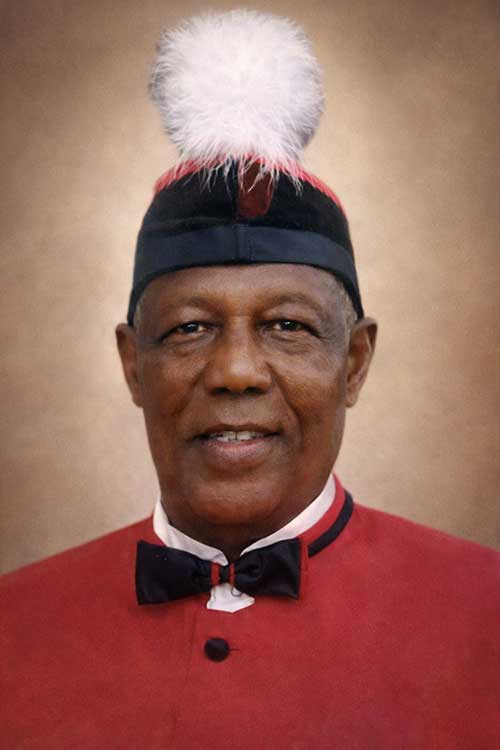
On June 4, 2011, he was invested as a Knight of the Sacred Order of St. Christopher (KSC) of the Anglican Communion, Diocese of Northern Izon. Until his death, he worshiped faithfully at Christ Church Interdenominational, Port Harcourt, and contributed resources to establish the CMS in Bayelsa State.
As a boy in Kolokuma/Opokuma, Sunday church attendance was compulsory. He sang as a chorister in Opokuma, often raising the first stanza before the congregation joined in, at a time when villages had no organs or pianos. His faith was deep, but never fanatical — a balance of devotion and humility.
Family
After completing his studies at Harvard in 1965, Lawrence married Rose Wanjiko Gishoki, a Kenyan, at Harvard Memorial Church, Cambridge, Massachusetts, on August 25, 1965.
Upon his return to Nigeria, Rose initially remained in Ibadan before joining him in Port Harcourt, where she served as Principal of Holy Rosary Secondary School. Together, they built a remarkable family, blessed with 20 children and 24 grandchildren — a testament to their enduring love and shared journey through life’s many phases.
Death
Ambassador Lawrence Ekpebu — erudite scholar, diplomat, and administrator — passed away in Yenagoa after a brief illness on January 2, 2022, at the age of 87. His death marked the end of a life defined by scholarship, service, and an unyielding commitment to justice and humanity.
Source:
- Excerpt from the Funeral Brochure of the Late Ambassador Lawrence Ekpebu