Teacher | Journalist | Broadcaster | Comedian | Cultural Icon
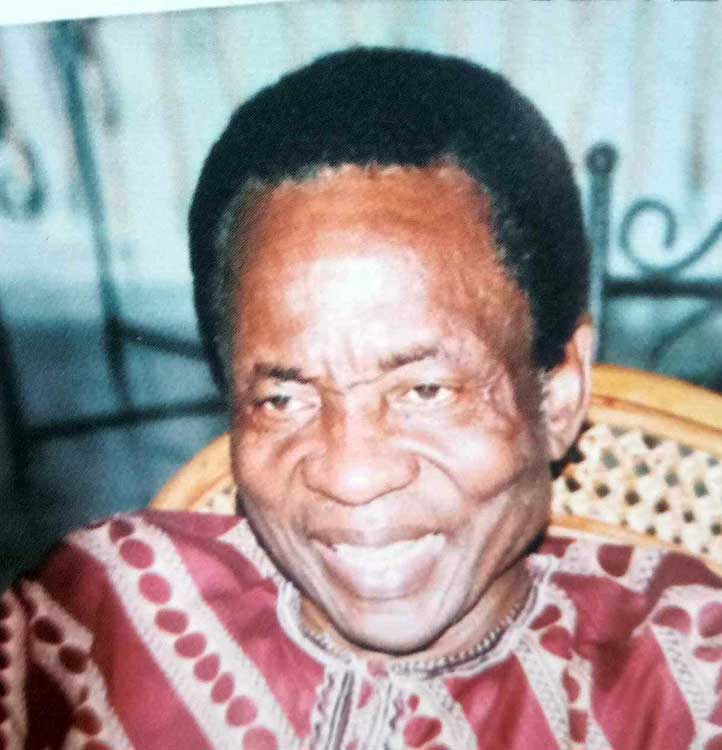
Boma Tom Erekosima, popularly known as “Country Man,” was a pioneering Nigerian broadcaster, journalist, humorist, and philosopher of the airwaves whose influence reshaped radio culture in the Niger Delta and beyond. Through wit, satire, and deeply rooted African proverbs delivered in Pidgin English, he became a household name in the 1980s and 1990s—earning recognition as one of the most captivating voices in Nigerian broadcasting history.
Early Life and Background
Born on 24th June 1949 in Eku (present-day Delta State), Boma was raised in a disciplined, intellectually vibrant home. His father, Mr. Tom W. Erekosima, was a professional teacher, while his mother, Mrs. Jemine Erekosima, hailed from Buguma in Asari Toru LGA of Rivers State.
Growing up in a household that valued both education and culture, Boma developed early the sharp intellect and expressive depth that would later define his public persona.
Education and Intellectual Formation
His education took him across multiple regions, reflecting both adaptability and academic strength:
- Pilgrim Baptist School, Umunede (1956–1961)
- Pilgrim Baptist Modern School, Oghie-Otah (1962–1963)
- Pilgrim Baptist Grammar School, Enohem
- Kalabari National College, Buguma (1965–1967)
- Academy Grammar School, Sapele (1967–1968)
- Hussey College, Warri (Higher School Certificate, 1970)
He later attended the University of Lagos, where he obtained a Diploma in Mass Communication in 1979.
Career: The Rise of a Media Legend
Boma began as an English Language teacher at St. Scholastica Girls’ School, Bakana, where his mastery of language earned him the nickname “Oxymoron.”
He transitioned into journalism and broadcasting, shaping public discourse through:
- Nigerian Broadcasting Corporation (1973–1977) – Senior Sub-Editor
- The Tide Newspaper – News Editor, Lagos City Editor, and Editor (1978–1987)
His greatest impact came at Rivers State Broadcasting Corporation (Radio Rivers), where he became a voice of the people—blending journalism with humor and cultural commentary.
The King of Talk Radio & Pidgin Revolution
At a time when Pidgin English was not considered fit for formal broadcasting, Boma revolutionized the space. Alongside contemporaries, he turned Pidgin into a powerful tool for mass communication, education, and entertainment.
His programs—especially “News in Pidgin”—became iconic, often introduced with his unforgettable line:
“Country people, na the thing wey dey happen for this we country I wan tell una so. The person una dey hear him voice na Boma Erekosima.”
His influence earned him the title:
“King of Talk Radio” on Radio Rivers 2FM Stereo in the early 1990s.
His humor was so compelling that during an official visit, Sani Abacha reportedly laughed uncontrollably at his performance—a rare testament to his brilliance.
Television and Creative Works
Boma extended his influence into television and literature:
- “Man Mouth” – addressing moral and societal issues
- “Duo” – broadcast nationwide on NTA
- “Wetin Dey Hapin”
His creative works include:
- “African Proverbs” (collection of indigenous wisdom)
- “Country Man in Concert Vol. I”
- “Akirika City of Poracot” (1979)
Voice of Wisdom: His Legendary Quotes
Boma Erekosima’s greatest legacy lies in his timeless proverbs, delivered with humor yet packed with truth. These sayings became moral compasses for everyday life:
- “Monkey smart monkey smart na because tree near tree.”
- “You go fit tell blind man say oil no dei for soup but no be pepper.”
- “Na situation make crayfish bend.”
- “Fly wey no dei hear word na im dei follow dead body enter grave.”
- “Craze man say craze dei sweet but the problem be say trekking too much.”
- “No matter how teeth and tongue quarrel, dem must settle because dem dey live for the same house and dem need each other.”
- “Weather say him tire for human being. Rain fall dem complain say cold too much, sun shine dem say heat too much. Which one you want?”
- “My people, advice no be curse o!”
- “Ear wey dey hear something no need big like house.”
- “Even though na water wey kill your brother, when you cry finish, na the same water wey you go take wash off the tears from your face.”
- “Bird say, anywhere wey fruit ripe, na there him dey go.”
- “Okporoko and egusi no be brothers, but when dem meet inside soup, dem dey understand each other.”
These were not mere jokes—they were philosophy, ethics, and social critique wrapped in humor.
Family Life
He was married to Mrs. Fabiawari Erekosima, and their union was blessed with seven children. Despite his fame, he remained deeply committed to his family and personal values.
Illness and Passing
Boma Tom Erekosima fell ill and was admitted to Seaside Clinic, Port Harcourt, on 25th February 1996, where he passed away the same day at the age of 47.
Legacy
Boma Erekosima remains a towering cultural figure—
a pioneer of Pidgin broadcasting,
a voice of wisdom for the masses,
and a master communicator who turned humor into truth.
He was not just “Country Man”—
he was the conscience of the airwaves.