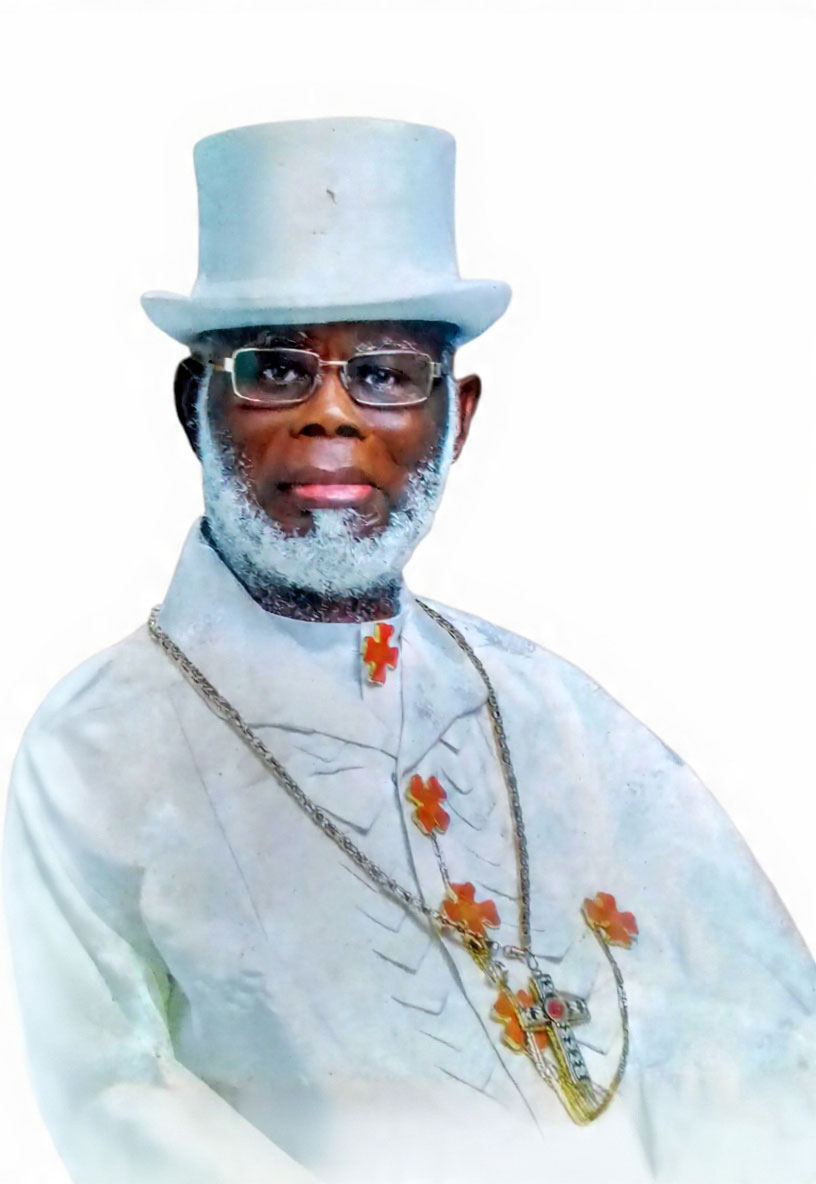
Birth and Childhood
The Kalabari town of Abonnema (Nyemoni) had grown into a booming commercial port and trading post in the early 20th century because of its natural seaport and sea routes. It hosted multinational companies like Thomas Welsh and the Niger Company.
It was in this town that Olunwa Benson Lulu-Briggs was born and had his early upbringing. Abonnema is now the headquarters of Akuku-Toru Local Government Area of Rivers State.
He was born on May 22, 1930 to Pa Benson Olulu Briggs and Madam Rachael Kioba Harrison Ogari Lawson. He had an older brother, Onyema Godwin Benson Olulu Young Briggs.
Though born into two aristocratic families in the Kalabari Kingdom: the Oruwari (Briggs) House of Abonnema and the Atonaye Pakaa (Pepple) of King Amachree Royal House of Buguma — O.B. Lulu-Briggs had a simple country life in childhood. His privileged parentage did not stop him from learning local crafts. He engaged in mudskipper hunting and felling mangrove trees for firewood. He was a hardworking young man.
He recalled almost drowning while paddling a dugout canoe on the Sombreiro River. He was a good swimmer but had paddled all day and was famished.
O.B. Lulu-Briggs was very close to his mother because of her care and strength of character. He also came under the guidance of his paternal grandmother, Madam Agbani Olulu Briggs, a highly regarded prophetess. Under her tutelage he imbibed honesty, morality and truth.
At age ten, he enrolled at Nyemoni School, Abonnema. He had deep retentive memory. In Standard 3, the headmaster had locked the class registers and traveled to Degema. Young O.B. reeled out the names of all pupils during morning devotion and roll call, earning him the nickname “Roll Call”.
He was a lad of great strength with an authoritative way of speaking — early signs of leadership. He was fearless and defiant. When the highly feared Chief Frank Obu Young Briggs, Iniikeiroari II of Kalabari Kingdom and Oruwari III, ordered damage to his grandfather’s house, young O.B. dashed to the Paramount Chief’s house to demand explanations. He refused to be silenced despite threats. Chief Frank Briggs came out ready to punish him, but changed to admiration, telling elders that Oruwari Briggs House had fearless warriors to succeed him.
The Sudden Twist of Fate and Struggle
Misfortune struck swiftly. His father died in December 1948 and his older brother Onyema Godwin died 11 days later in January 1949. He was still in primary school.
He became an only child and was taken to Jos by his mother, where he completed primary school in very difficult financial circumstances. Born into royalty with a successful merchant father, he was thrown into penury.
He passed the common entrance to Hope Waddell Training Institute, Calabar and Kalabari National College, Buguma, but his mother’s petty fish business could not pay his fees. He supported her by mudskipper fishing in snake-infested swamps. Seeing classmates in KNC uniforms hurt him, but classmates drew his attention to the college motto: “Per Aspera Ad Astra” — Through hardship to the stars. That made a permanent impression.
To survive he felled trees for firewood, worked as a labourer, deckhand, truck pusher at “Man Must Wack” in Port Harcourt, agricultural labourer in Bida, and a Police Constable. He left the Police after two years due to poor pay and joined Mandilas & Karabaris Ltd as a clerk.
He developed a habit of studying at the British Council Library, Yaba. A female English librarian, impressed by his diligence, made a special appeal for him to be interviewed at the Nigerian Ports Authority even after the deadline. He was employed as a clerk at NPA in 1955. As he put it: “A man’s greatness does not suffer any loss or diminish by his being honest about his past no matter how lowly or uneventful that past might have been.”
Public Service and Politics
At NPA he served meritoriously for 23 years, 9 months and 13 days, rising from Accounts Clerk to Principal Industrial Relations Officer and Head of Division, Eastern Ports. He retired voluntarily in April 1978.
He was a labour unionist nicknamed “Obluquake” and “Hurricane OBLU”. He served as:
- Secretary, NPA Workers Union for 7 years
- Chairman, Maritime Trade Union Federation, Eastern Ports, 1968-1971
- Founder and President, Rivers State Council of Labour, 1970-1972
He chose politics as his next platform. He was a founding member of the National Party of Nigeria (NPN) and rose to Deputy National Chairman (South). He contested the NPN governorship primaries in old Rivers State in 1982 and the SDP Presidential primaries in 1993. Both were unsuccessful.
He was part of Nigeria’s progressive political circles. His residence at 17 Igbodo Street and office at 5 Harbour Road, Port Harcourt became rallying points. Through the Eastern Mandate Union he interacted with leaders like Ebitu Ukiwe, Shehu Shagari, Edwin Clark, Anthony Enahoro and others.
He was a chieftain of NADECO that resisted the annulment of June 12, 1993. During the transition of General Abdulsalami Abubakar he was involved in the formation of APP, AD and PDP.
The Rivers State University, conferring him an honorary Doctor of Business Administration in 2011, noted: “The life of Chief O.B. Lulu-Briggs has been one dedicated to the very best traditions of public service of our beloved nation, Nigeria.”
Business as Sacrifice
Finding politics limited, he entered business to serve. He invested in hospitality — Rachael Hotel in Port Harcourt named after his mother — tugboats, construction and hydrocarbon. He floated Krakrama Investment Ltd, Rachael Holdings, Moni Pulo Ltd, Lubrik Nigeria Ltd and Ludal Nigeria Ltd.
In 1989 he registered Moni Pulo Limited in oil and gas, naming it after his hometown Nyemoni (Abonnema). In 1992 he was among few Nigerians awarded Oil Prospecting Licenses by General Babangida. Against the practice of selling licenses, he chose to develop them to create jobs. In 1998 Moni Pulo found oil in commercial quantity.
Moni Pulo runs a 100% indigenous workforce and prioritizes staff training. With the philosophy of “Business as Sacrifice”, the company practices participatory development with host communities and invests heavily in education, from school blocks to university endowments at UNIPORT, Niger Delta University, Rochester Institute, and others.
In 2001 he founded the O.B. Lulu-Briggs Foundation to uplift lives. It works in 5 areas:
- Care for Life – homes for the elderly in Abonnema and Abua
- Education and Scholarships
- Free Medical Missions – over 150,000 beneficiaries across 4 Niger Delta states
- Micro-Credit and Entrepreneurship
- Access to Portable Water and Sanitation
Philanthropy: A Tool in the Hands of God
“God has been so kind to me in life and I feel highly privileged. The only way I can show my gratitude to God is to use my resources to support those who are underprivileged.”
He believed poverty was cyclical and sought to break it. His generosity was legendary before and after the Foundation. He funded churches, built hospitals like Our Saviour’s Hospital, Port Harcourt, rebuilt the Agbani Prayer House founded by his grandmother in 1920, and distributed pipe organs to churches. Through his Campaign for Christ he engaged in church planting and evangelism.
Ambassador Godknows Boladei Igali said: “Without doubt he was one of the most outstanding philanthropists and humanist in Nigeria… giving out to others was the raison-d’etre for his earthly sojourn.”
Chieftaincy and Community Service
He held three major chieftaincy stools:
- Iniikeiroari V of Kalabari
- Oruwari VII, Paramount Head of Oruwari Briggs House, installed November 29, 2014
- Ebuye Lulu of Abonnema, ascended March 6, 2010
Following his ancestor Chief Iniikeiroari I, he established over 20 chieftaincy stools. In 2005 he organized a week-long centennial celebration for Iniikeiroari I.
He was a peacemaker. In 2006 he led Oruwari Briggs House to reconcile with Abonnema Council of Chiefs. He reconciled Tombia and Bakana communities and Buguma princes. He served as Chairman, Finance Committee of Kalabari Se Kobiri. At the height of militancy he assembled study groups to seek peaceful solutions, convinced that “no meaningful development can take place without peace and stability.”
The Throne of Nyemoni: History, Chieftaincy, and Succession
The history of Abonnema (Nyemoni) is inseparable from the name Briggs.
In 1882, it was Young Briggs — Iniikeroari, Oruwari II — who led the conquest and founding of the town. That act of war, settlement, and vision cemented the Briggs family as the architects of Abonnema itself.
For this reason, a deep conviction took root in the Briggs enclave: the throne of Abonnema rightfully belongs to the house that built it. Many argued that only descendants of Briggs should produce the Amanyanabo (King) of Abonnema.
But Kalabari tradition was different. When the kingdom was one, there was only one Amanyanabo — King Amachree in Buguma. Other settlements were governed by Amadabo — caretakers.
In Abonnema, that first caretaker was Chief Ekine (Bobmanuel), Manuel II, son of Manuel (Owukori). Because his stool was the highest among those represented, he was accorded the respect of Amadabo.
The Shift
As the 20th century progressed and communities sought autonomy, the Amadabo title quietly became Amanyanabo in Abonnema and other towns. That single word change detonated a crisis of legitimacy.
The Briggs compound stood firm: “We founded this town. The crown must return to us.”
They rejected the elevation of the Manuel line and insisted that allegiance should still flow to King Amachree in Buguma, not to a caretaker dynasty turned king.
The Conflict Within Briggs House
The battle was not only between compounds, but within Briggs itself.
Chief Awoye Benibo Briggs, Oruwari V, as Paramount Chief of Briggs Compound, resisted attempts to unseat him.
Chief R.R. Briggs led a faction pushing for change. They were opposed by Chief Godwin Alabraba and Chief Ferdinand Alabraba. The rift deepened until R.R. Briggs and his supporters were suspended from the Abonnema Council of Chiefs.
It was in this charged atmosphere that Chief O.B. Lulu-Briggs entered the arena. Not yet a chief, he was aligned with the forces seeking to reassert Briggs dominance.
The chessboard shifted:
- R.R. Briggs proclaimed himself Head of the Briggs House in Buguma and swore allegiance to King Amachree, the then Amanyanabo of Kalabari — a move many considered untenable. Consequently, he was suspended as a chief by the Abonnema Council of Chiefs.
- O.B. Lulu-Briggs was installed as Chief Young Briggs, Iniikeroari V, inheriting the stool in Abonnema.
- After Awoye’s death in 1996, Godwin Alabraba became Oruwari VI in 1997.
- Years later, Chief Lulu-Briggs reconciled and was properly installed by Oruwari VI himself.
The Unfinished Question
Even in reconciliation, the core dispute never died.
Chief Lulu-Briggs and his allies maintained that only descendants of Young Briggs should produce the Paramount Head Chief. Whispers in the community suggested he aimed for the Paramount Headship of Briggs Compound — the second most powerful stool — as a platform to challenge the Amanyanabo system itself.
His vast wealth and influence made him a formidable force in litigation and politics. Chiefs like Godwin Alabraba chose a different path, avoiding open warfare.
Until his death, Chief O.B. Lulu-Briggs remained under suspension by the Abonnema Council of Chiefs.
Yet in death, the town could not ignore him. The Council honoured his funeral rites because Chief Dumo Lulu-Briggs was installed as a chief while his father lay in the morgue, and formally invited the community to bury a son of Abonnema.
The Meaning
This is more than a family quarrel. It is the story of founders versus caretakers, conquest versus custom, legitimacy versus evolution.
It is the unresolved question of Abonnema: Does the crown belong to the hand that built the city in 1882, or to the line that has sat on the stool since?
High Chief O.B. Lulu-Briggs lived at the center of that question. His life, his chieftaincy, his suspension, and his reconciliation all mirror the enduring tension between history and power in the Kalabari Kingdom.
In the Vineyard of God
Baptized David at St. Augustine’s Anglican Church, he remained faithful. He held thanksgiving services every December 26 in Abonnema and July prayer sessions for his grandmother’s descendants. In 2008 the Communion of Pentecostal Bishops of Nigeria conferred on him Defender of the Christian Faith (DCF).
Honours, Awards and Appointments
- Officer of the Order of the Niger (OON), 2003
- Distinguished Service Star of Rivers State (DSSRS), 2007
- Honorary Doctorates – University of Port Harcourt, 2006; Rivers State University, 2011
- Forbes listed him among 40 richest Africans
- AIT Lifetime Achievement Award for Philanthropy, 2018
- Thisday Lifetime Achievement Award
- Silverbird Extraordinary Achievement Award, 2016
- Traditional titles: Se-Boromabo, Ire-Alaye of Owo, Opomulero of Ijero Ekiti, Ebubedike of Obowu, Osuohia of Ikwueke-Ndoki, High Chief of Ke Efik Eburutu
- Honorary Citizen with Key to the City of Houston, USA
Family Life
He was a devoted family man and progressive monogamist — one wife at a time.
- First child: Senibo Lulu-Briggs, born June 16, 1950, mother Madam Abigail Daine Lloyd Jack
- Second son: Chief Dumo Lulu-Briggs, Iniikeiroari VI, born June 13, 1964, mother Madam Irene Iwo Sokari Danagogo
- Other children include Sofiri, Rachael, Dateim, Owanate, Solate, Aima, Onimim, Iyowuna and many grandchildren and great-grandchildren.
He ensured all his children were educated and instilled in them values of sharing and service.
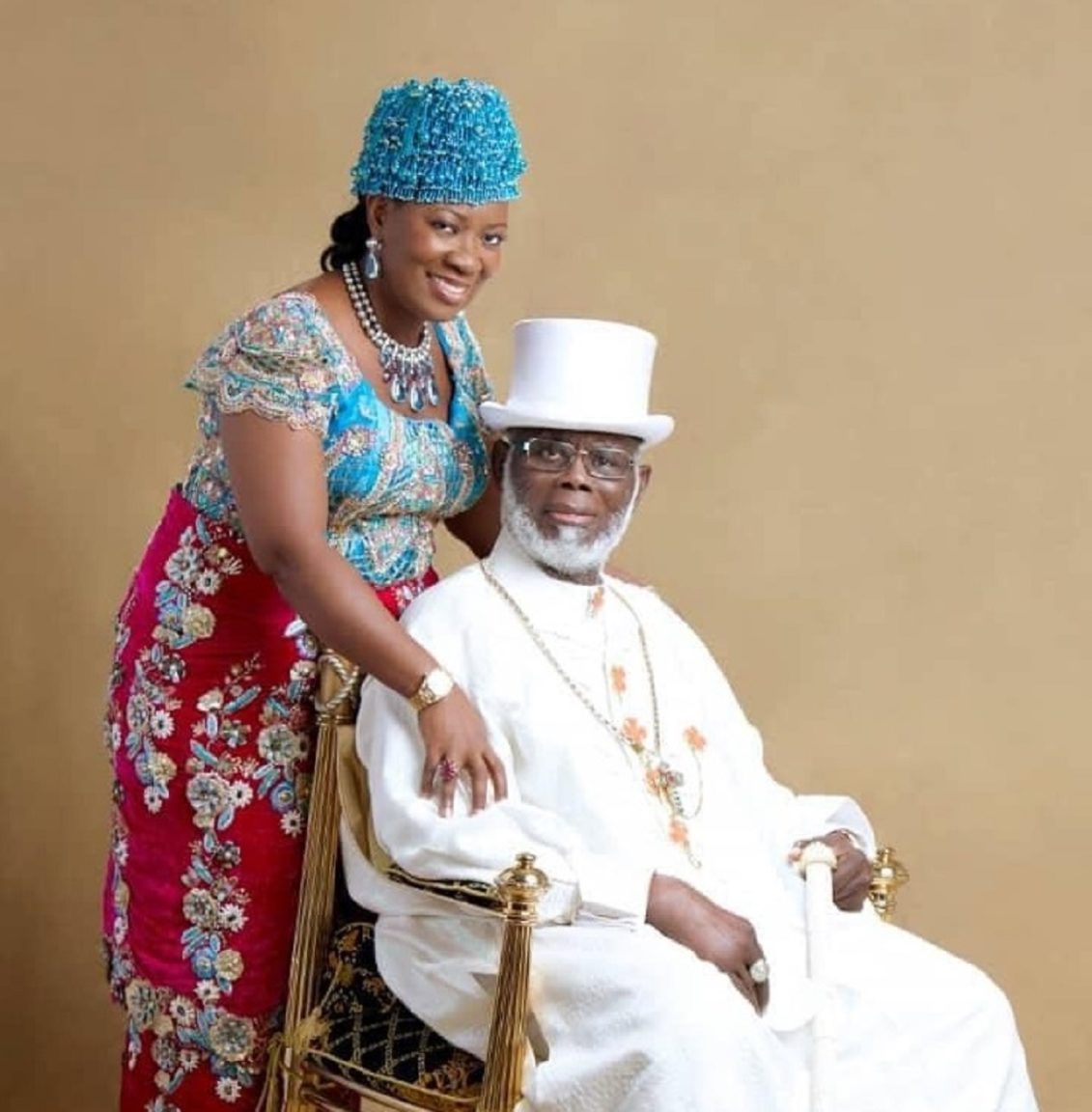
He was survived by his wife, Dr. (Mrs.) Seinye O.B. Lulu-Briggs, who has served as Chairman/Chief Executive of Moni Pulo Limited (MPL) since 2019, continuing his legacy in business, philanthropy, and nation-building
Death: The Path That We All Must Take
He battled Parkinson’s disease and in 2016–2017 slipped into a coma but miraculously recovered. He returned to Nigeria in 2017 and celebrated his 87th birthday.
On December 27, 2018, at age 88, High Chief O.B. Lulu-Briggs passed to eternity. His story became an epic: born into royalty, thrown into poverty, he journeyed through Jos, Bida and Lagos, and returned in grandeur to bring prosperity to many.
Listed by Forbes, honoured by AIT and Thisday, he came, he saw and he conquered. Through hard work and willpower he became captain of his destiny. His legacy in business, politics, philanthropy and community lives on. As many say, he is “The Man That Will Never Die.”