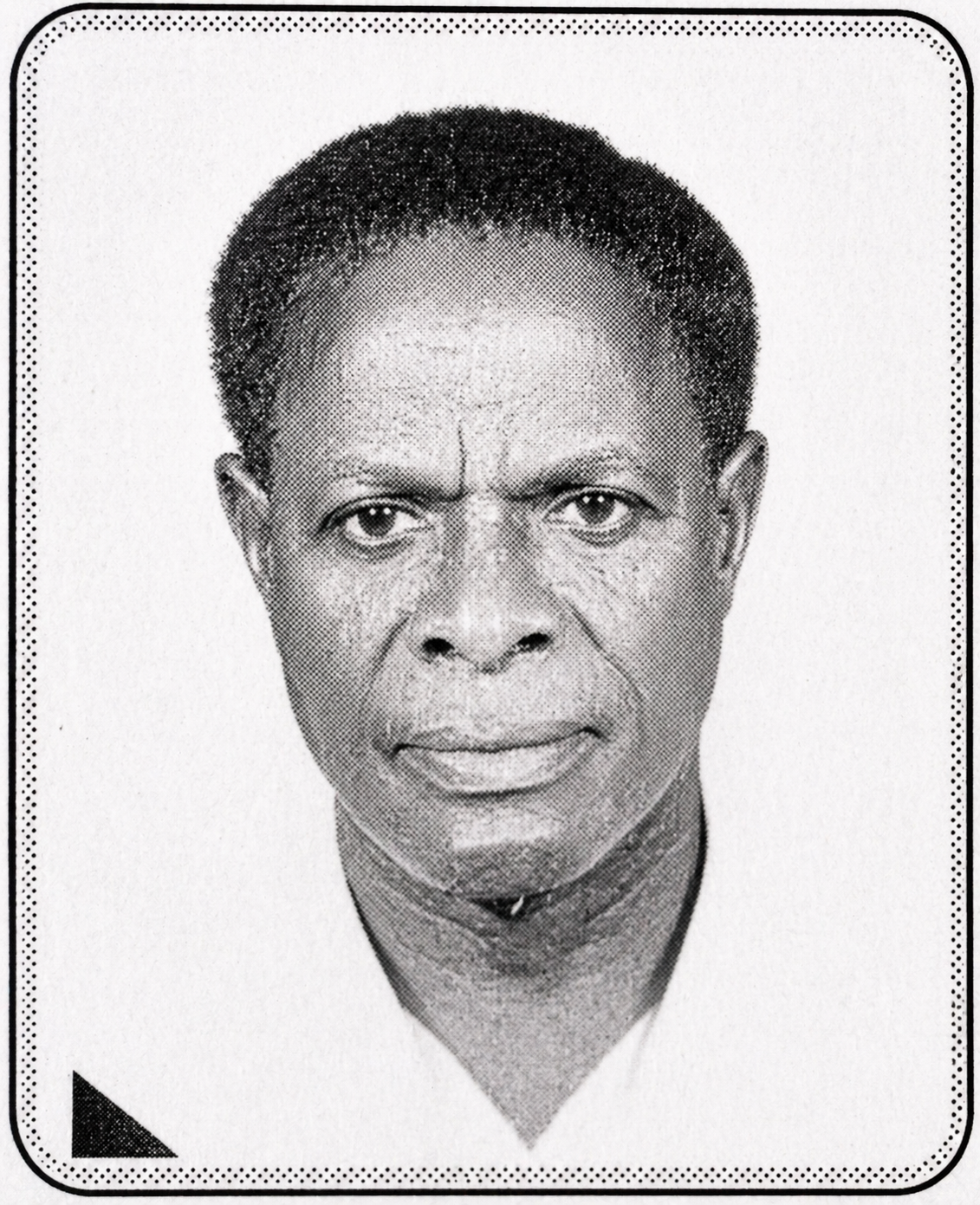
Trailblazer of Ogbia Development | Visionary Leader | Community Architect
Chief Maclean Ngorala Harold Dangosu stands as one of the most consequential figures in the socio-political and infrastructural evolution of Ogbia Kingdom in present-day Bayelsa State, Nigeria. A man of uncommon foresight, courage, and public spirit, his life’s work laid enduring foundations for education, unity, and physical development across the Ogbia axis and beyond.
Born on 18th October 1922 at Otakeme in present-day Ogbia Local Government Area, Chief Dangosu hailed from a lineage rooted in service and community leadership. He was the son of late Chief Harold Awoko Osu and late Madam Juliet Digienen Dangana, both of Otakeme.
Early Life and Education
Chief Dangosu began his formal education in 1932 at St. Mark’s Anglican School, Otakeme, where his brilliance quickly distinguished him. Demonstrating exceptional academic ability, he completed Junior Primary I and II within a single year and was promoted accordingly. He later proceeded to St. Michael’s (C.M.S.) School, Oloibiri, where he completed his Standard Six in 1938, sitting for the examination at Abonnema.
In a class famously referred to as “six-in-six,” only two candidates—Chief Dangosu and Chief R. O. A. Abila—successfully passed the external examination, a feat that underscored his intellectual distinction from an early age.
Early Career and Entry into Public Service (1939–1945)
Immediately after completing his primary education, Chief Dangosu commenced employment in 1939 at the Divisional Office in Brass, working directly under the Divisional Officer. By 1940, he transitioned to the Accounts Department, where he acquired valuable administrative and financial experience.
His sense of responsibility and commitment to collective advancement manifested early. Alongside his cousin, late Chief Jenner N. Abali, and Chief Sylvanus N. Edoni, he co-founded the Ogidama (now Otakeme) Education Society. The group contributed five shillings monthly toward the education of young people in Otakeme—an early demonstration of his lifelong dedication to human capital development.
In 1941, he was transferred to Oloibiri, where he assumed office as Secretary-Treasurer of the Ogbia District, succeeding Chief E. B. Kalango. His administrative competence led to his appointment as Secretary of the Ogbia Brotherhood in 1945, a pivotal organization in the history of Ogbia.
The Ogbia Brotherhood and the Birth of Collective Development
Founded in 1940 under the leadership of late Chief (Rev.) George Igabu Amangala, the Ogbia Brotherhood was conceived as a vehicle for unity and educational advancement. Chief Dangosu was not only a co-founder but also one of its most committed architects.
Through the Brotherhood, he helped institutionalize an education levy system, which funded scholarships for post-primary education and strengthened communal bonds across Ogbia. The Brotherhood evolved into a central socio-political platform, effectively functioning as a unifying assembly for Ogbia people both at home and abroad.
Revolutionizing Infrastructure: The Brotherhood Roads (From 1948)
Understanding that development was impossible without connectivity, Chief Dangosu embarked on a bold and unprecedented mission in 1948—the construction of road networks across Ogbia, at a time when most communities were accessible only by narrow bush paths and waterways.
These roads, later known as the “Ogbia Brotherhood Roads,” were initiated through personal sacrifice and communal mobilization. Chief Dangosu personally led exploration and survey efforts, often trekking difficult terrains with his dog, “Sidon-look.”
Key road projects included:
- Otakeme – Otuogidi – Oloibiri corridor
- Otuogidi – Oloibiri Court Beach road
- Extension to Opume, facilitated through collaboration with the Amaebimogbo Club, led by Mr. Maclean Emmanuel Egbo
- Expansion into Emakalakala, Akepilai, Okarki
- Final extensions from Emeyal I to Otuoke and Emeyal II to Elebele
Despite resistance from some quarters—including complaints of crop damage—his work received official validation. The Divisional Officer, Mr. G. W. Thomp, after inspection via the steam launch “S.L. Igret,” endorsed the projects.
By 1951–1952, the road networks had reached significant completion and were formally commended by government authorities, who subsequently provided tools to support further development.
International Exposure and Recognition (1952–1953)
In April–May 1952, Chief Dangosu attended the prestigious Community Leadership Development Course at Man O’ War Bay, Victoria, Cameroon. The program brought together development leaders from across Nigeria.
During the course:
- He participated in rigorous field exercises, including climbing the Cameroon Mountain and the Nachtigal (Victoria Lighthouse).
- He distinguished himself as an international swimmer, earning a certificate (later lost during the Nigerian Civil War).
Upon his return, he intensified his development initiatives, linking the Anyama group of communities to the Oloibiri–Okarki–Ahoada–Port Harcourt trunk road and initiating structured town planning schemes.
In recognition of his exceptional contributions, he was awarded the Coronation Medal of Queen Elizabeth II in October 1953, presented by Major J. G. C. Allen (Rtd.), then Senior Resident in Port Harcourt. He remains the only Ogbia indigene to have received this prestigious honour.
Political Leadership and Cooperative Development
Chief Dangosu’s leadership naturally extended into politics. He was a leading political figure in Ogbia, initially aligning with the Action Group before later joining the National Council of Nigerian Citizens (N.C.N.C.).
His public service roles included:
- Representative of Ogbia in the Provincial Assembly, Yenagoa
- Chairman of the Ogbia County Council, where he supervised the construction of administrative buildings and infrastructure
In the early 1960s, he further advanced economic development by establishing the Ogbia Itabiai Farmers Multi-purpose Cooperative Society, promoting agriculture and cooperative enterprise.
Civil War Experience and Later Career
During the Nigerian Civil War (1967–1970), Chief Dangosu was taken into the Biafran enclave. Following the war’s end in January 1970, he returned home, where he was briefly detained before being cleared.
In his post-war career, he joined West African Oilfield Services (Nigeria) Ltd., rising through the ranks to become Administrative Manager and eventually Director in April 1989.
He also served as a Director of Micro-Golem Nigeria Ltd., contributing to engineering and contracting services.
Role in the Oil Economy (From 1954)
With the arrival of Shell D’Arcy (now Shell Petroleum Development Company) in Oloibiri in 1954, Chief Dangosu became one of its earliest indigenous contractors. He also established one of the largest trading outlets within the Shell camp.
Significantly, he was among the first voices to demand oil royalty payments for host communities—an early advocacy for resource justice in the Niger Delta.
Humanitarian Legacy and Social Influence
Chief Dangosu was widely regarded as a protector of the people. During the late 1950s and early 1960s, he used his influence to secure bail for numerous individuals entangled in police and court cases—often at great personal risk, including paying fines when beneficiaries absconded.
His relentless compassion earned him reverence as a saviour figure, and his influence extended across political, religious, and social circles.
Personal Life, Faith, and Character
A deeply spiritual man, Chief Dangosu remained a devoted Anglican Christian throughout his life. He actively supported church development, including the installation of a thunder protector at St. Mark’s Anglican Church, Otakeme, as a thanksgiving offering after the Civil War.
He later became the first Life Patron of St. Bottle’s Church International in 1993, recognized for his humility, sociability, and respect for human dignity.
He was also a successful farmer and entrepreneur, cultivating crops and maintaining plantations—even in areas once feared for mysterious occurrences, which reportedly ceased after his intervention.
Death
Chief Maclean Ngorala Harold Dangosu passed away on 14th July 1993 after a brief illness, bringing to a close a life of extraordinary service and impact.
Legacy
Chief Dangosu’s life remains a towering testament to visionary leadership, grassroots development, and selfless service. His contributions to road infrastructure, education, political organization, and community cohesion continue to shape the trajectory of Ogbia and the wider Niger Delta.
Yet, it is a sobering reflection of history that a great mind of such verifiable accomplishments has not been adequately venerated or immortalized by the very Ogbia people whose progress he so profoundly influenced.
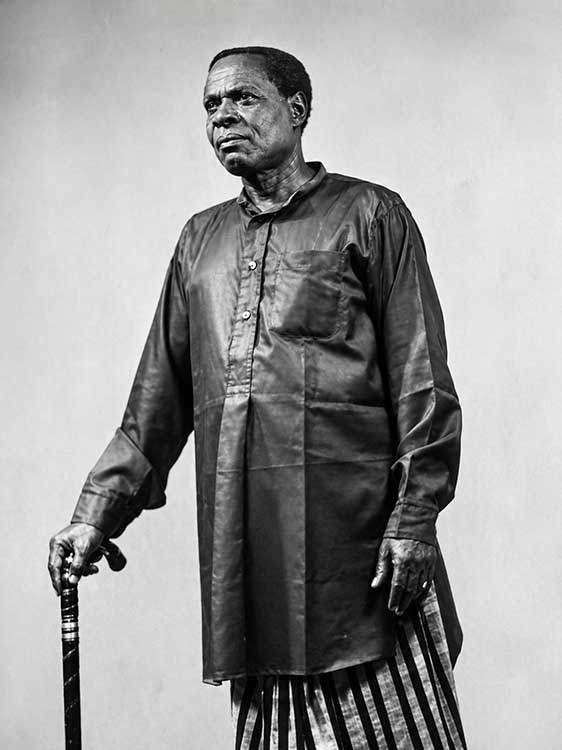
His story endures—not only as a record of achievement but as a call to remembrance, honour, and continuity.
source:
- This article was prepared and supplied by Otakeme Community History Achieve .