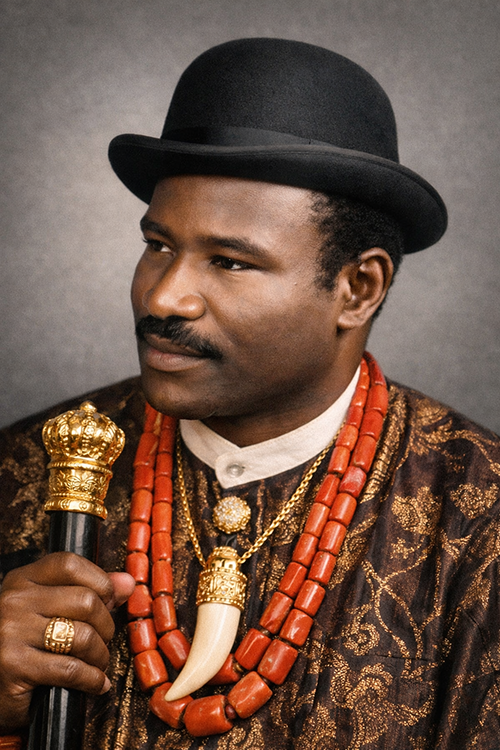
Economist | Public Administrator | Community Strategist | Orator | Traditional Leader
Legacy Profile
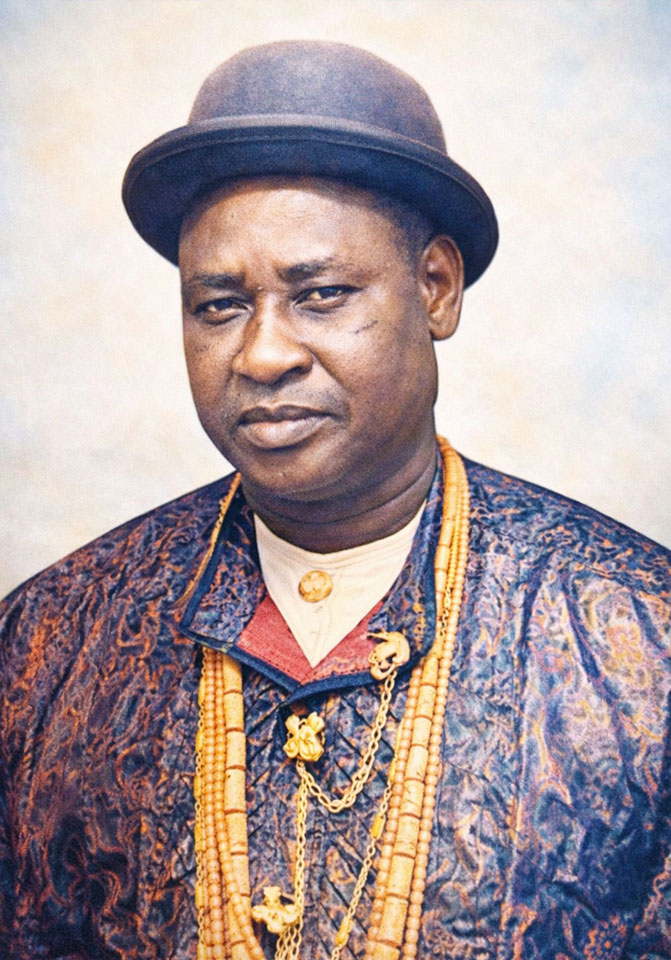
Chief Solomon Dayanyubofa Dambo was a towering figure of intellect, courage, and community consciousness—a man whose life was defined by service, scholarship, and an unyielding commitment to justice and development in Nembe Kingdom and beyond.
A distinguished economist, seasoned public administrator, and revered traditional chief, he stood at the intersection of governance, community advocacy, and intellectual leadership. His contributions to civil service, economic policy, and socio-political struggles in the Niger Delta remain indelible.
Even in the face of terminal illness, he remained steadfast in faith, holding firmly to his belief in God’s omnipotence—the power to transform impossibility into possibility—until his passing in the early hours of Monday, September 22, 2014.
Birth and Lineage
Chief Solomon Dayanyubofa Dambo was born on March 11, 1938, in Opu Nembe (Bassambiri), in present-day Bayelsa State, Nigeria.
He hailed from a prestigious and historically significant lineage. His father, Chief Walson Warimbogha Dambo (Chief Oje), was a man of influence and standing in Nembe, while his mother, Madam Comfort Dambo (née Amara), traced her roots to the Tonbofa family in Agbere and the Amara family of Odoni.
Through both paternal and maternal lines, he was connected to the revered dynasties of Nembe, including the royal heritage associated with King Ogbodo’s lineage and the powerful Mem dynasty—underscoring his deep cultural and historical roots.
Early Education and Academic Pursuit
Chief Dambo’s early education unfolded during a challenging era in Opu Nembe, when missionary activities had not yet established fully developed educational institutions. As a result, like many determined young minds of his generation, he had to continue his education outside his hometown.
He began at Swedenborg Memorial School (SMS) but completed his primary education elsewhere due to limited facilities in Opu Nembe.
Recognizing his potential, his father personally secured his admission into Kalabari National College (KNC), Buguma in 1954—a testament to both parental commitment and his academic promise. He completed his secondary education in 1959, successfully writing the Cambridge School Certificate Examination.
Work–Study Resilience and University Education
In 1960, he began working as a clerk with the Electricity Corporation of Nigeria (ECN) in Lagos.
However, inspired by the academic achievements of his elder brothers—who had all attained university education—he pursued further studies with remarkable determination. Balancing work and education, he obtained excellent results in the General Certificate of Education (Advanced Level), qualifying for direct university admission.
He gained admission into the University of Lagos in 1964 to study Economics and resigned from his job to pursue his academic ambitions.
Despite financial constraints and limited access to scholarships, he persevered with support from his family and through vacation jobs. In 1967, he graduated with a Bachelor of Science (Second Class Upper Division) in Economics—a remarkable achievement at a time when university education was highly competitive and rare.
This experience shaped his enduring philosophy: “Be your brother’s keeper.”
Career in Public Service and Economic Administration
Chief Dambo began his professional career in the Federal Civil Service, where he was posted to the Ministry of Commerce and Trade, Lagos, as an Assistant Secretary.
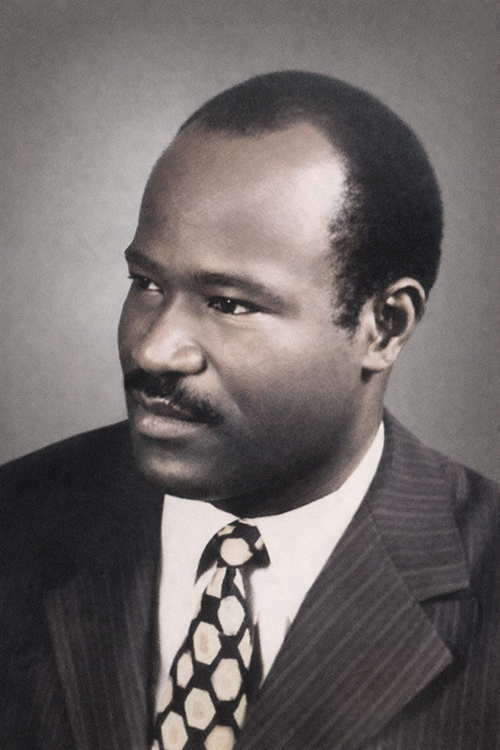
Seeking a more intellectually engaging environment, he later joined the Central Bank of Nigeria (CBN)—a move that would define his professional legacy.
At the CBN, he served in the Research Department, where he contributed to fiscal policy development and presented analytical papers on economic matters. His analytical brilliance and communication skills quickly distinguished him.
He rose through the ranks to become:
- Principal Research Officer
- Later deployed to the Foreign Exchange Department, where he simplified complex approval processes
- Ultimately promoted to Controller and posted as Branch Controller, Ibadan
One of his most significant national assignments came in 1971, when he played a key role in the exchange of Biafran currency following the Nigerian Civil War. His clarity and guidance helped many citizens preserve their financial value during the transition.
Transition to Development Administration
In 1982, he joined the Niger Delta Basin Development Authority (NDBDA) as Assistant General Manager (Finance and Administration).
He later served at the Benin-Owena Basin Development Authority (BWBDA) before eventually disengaging from active civil service. Although he worked in multiple institutions, he formally retired from the Central Bank of Nigeria in 1987.
Community Leadership and Intellectual Advocacy
Chief Dambo’s greatest impact extended beyond formal employment into community leadership, advocacy, and intellectual resistance.
He was deeply involved in the development of Opu Nembe and became a central figure in its socio-political struggles.
Key Contributions
- Active member of Bassambiri Improvement Union (Lagos Branch)
- Head of Reception Committee for the historic 1979 visit of HRH Collins Festus Amaegbe Eremienyu (Ogbodo VII)
- Played a decisive role during the Nembe–Kalabari conflict (1992) by mobilizing funds and support
- Authored critical memoranda used in:
- The Justice Peter B. Akere Commission of Inquiry (1993)
- Boundary disputes involving River San Bartholomew
- Bayelsa State’s legal position at the National Boundary Commission (2010)
His intellectual depth, historical knowledge, and persuasive articulation made him a feared debater and respected strategist.
Traditional Leadership and Recognition
Chief Dambo was formally installed as a Chief in 1990, following the death of Chief Joseph Nimibiyo Dambo.
He later registered with:
- Opu Nembe Council of Chiefs (1994)
- Brass Divisional Council of Chiefs (1995)
As Secretary of the Council, he became a key voice in traditional governance and policy articulation.
His advocacy at the Timi Okara Panel (2001) contributed significantly to the upgrading of the Amanyanabo of Nembe (Bassambiri) stool to a First-Class status, correcting a long-standing historical imbalance.
Social Life and Personality
Chief Solomon Dayanyubofa Dambo was a vibrant, sociable, and charismatic personality.
He built relationships across communities and was known for:
- His generosity and humility
- Personally attending to guests despite his status
- A deep sense of responsibility to family and society
He lived fully, embraced life, and left behind a legacy of service, intellect, and human connection.
Family Life
He married Mrs. Stella Munasconyu Dambo (née Dokuba) in 1973.
Their union was blessed with seven children, all of whom attained higher education—reflecting his strong commitment to family development and education.
Legacy and Final Reflections
Chief Solomon Dayanyubofa Dambo was more than a public servant—he was a pillar of strength, a custodian of history, and a voice of reason in times of conflict.
He served as:
- A strategist in community struggles
- A spokesman (“bibi okolo”)
- A defender of Nembe’s territorial and cultural integrity
His life’s work continues to influence legal, political, and historical discourse in the Niger Delta.
Passing
Chief Solomon Dayanyubofa Dambo passed away peacefully on September 22, 2014, at 5:00 a.m., after a prolonged illness.
Enduring Legacy
His life remains a powerful testament to:
- Intellectual courage
- Community leadership
- Faith in God
- Commitment to justice
He lived not just for himself, but for his people—and in doing so, secured a place among the timeless figures of Nembe history.
“Ogina tonteye Dayanyubofa.”
May his noble soul rest in perfect peace.