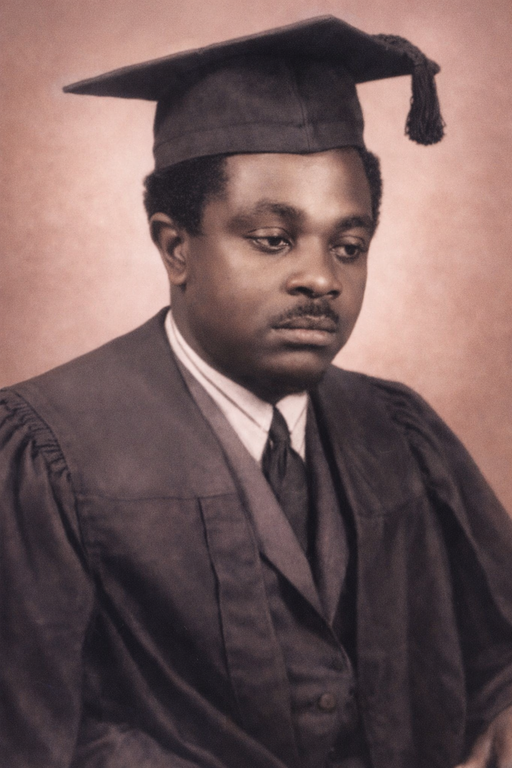
Teacher, Headmaster, Principal, Administrator, Organist, Composer
Luke Tubo Martha Oruwari was widely recognized as one of the foremost church organists and musicians from the Niger Delta, with a long list of appreciations and achievements.
Who Was Luke Tubo Martha Oruwari?
Born on St. Luke’s Day in the Anglican calendar at Nembe-Ogbolomabiri town, Southern Nigeria (Bayelsa State), in 1939, Luke Tubo Martha Oruwari was a master of choristers and an organist for many churches in the Niger Delta during the 1970s and all through the 1990s. He was recognized beyond the Niger Delta as a liturgical and concert organist of the highest order. By dint of hard work and commitment, he earned a Bachelor’s degree in Education at the prestigious University of Ibadan in 1977. LTM, as he was fondly called, distinguished himself as an educationist par excellence, and he composed over 350 songs in his lifetime.
Alabo Luke Tubo Martha Oruwari, an Anglican, died in 2000 at the age of 61 years.
His Parents and Birth
Luke Tubo Martha Oruwari’s father was Mr. Isaac Morrison Yoghoboghabofa Oruwari, a renowned schoolteacher and headmaster from the Nembe community, and his mother was Mrs. Martha Oruwari (née Ekigha), an industrious trader, also from the Nembe coastal community of Bayelsa State; both of blessed memory.
Luke Tubo Martha Oruwari was born on Wednesday, 18 October 1939, St. Luke’s Day in the Anglican calendar, at the late Mama Darling’s Maternity Home at Ockiya Ewoama in the Nembe coastal community, Southern Nigeria (now Bayelsa State). His birthday was significant according to the Anglican calendar, so a holy reverend gentleman, Rev. A.A.D. Spiff, christened the baby boy “Luke” and said, “Let him show the light.” Incidentally, the name “Luke” means “Light Giver.”
His Education
From 1947, he had his primary education at Saint Luke’s School, Nembe, and obtained his First School Leaving Certificate in December 1954 thereabout. During his exit from St. Luke’s School in 1954, Luke Tubo Martha Oruwari met his best teacher ever: F. M. Tamunoene of Okrika (now late). Mr. Tamunoene was a resourceful musician from whom Luke Oruwari drew much of his musical inspiration and learned the most interesting hymn tunes for the very first time.
LTM and the Archdeaconry Office
From late 1955, Venerable A.A.D. Spiff (late), the Archdeacon of Bonny Archdeaconry of Port Harcourt, got wind of LTM’s graduation from primary school and that he was now under apprenticeship in tailoring at Okpoma-Brass district. He immediately requested for young Luke Oruwari and got him employed in the Archdeaconry office at the time as an office boy. Thus, Luke Oruwari built up his experience in the fundamentals of office practice, shorthand, and typing, which were of invaluable use to him till death.
Unfortunately, towards the close of 1957 thereabout, news of the imminent closure of the Bonny Archdeaconry office, following the transfer of the venerable gentleman A.A.D. Spiff to St. Mark’s College, Awka, at the end of the year, was announced.
Archdeaconry Office Shutdown
The young, inexperienced Luke Oruwari found himself in a fix and even muttered, “Where do I go from here?” It was an enormous predicament for him to bear at the time. This was not the end of the music icon in the making. Luke Oruwari mustered courage, said prayers, and made a far-reaching life decision.
Eventually, young Luke resolved that no matter the circumstances that would prevail, with the aid of Almighty God, he too would strive to be a university graduate in the near future, like his counterparts.
Music Grooming
Young Luke Oruwari adopted the slow, winding teacher-training route. He consequently read for and passed the entrance examination into the teaching profession.
From 1957, he found himself in the teaching profession under the Anglican Church, firstly at St. John’s School, Creek Road, Port Harcourt. Meanwhile, he still lived at the Archdeaconry house with Venerable Alasomuka (now late) of Okrika.
The three years he spent there afforded him much of the experience he so desired for the actualization of his latent talents as a musician, educationist, administrator, and leader.
At St. Cyprian’s Church Choir, he had serious grooming in singing, choir administration, and conducting. On Mr. Briggs’ (now late) pedal harmonium, Oruwari practiced how to manipulate the keyboard.
It was at St. John’s School that he came in contact with able singing masters and mistresses such as Mr. Miebaka of Okrika, a dutiful scoutmaster at the time, and Mrs. Allison of Bonny, both of blessed memory, from whom he drank profusely from the foundation of school music.
Making of a Teacher
In 1960, he attended Oporoma Teacher Training College and was found to be among the best in the student population; he was also excellent in academics and sports. He was appointed Senior Prefect, the leader of the school, in 1962. That was the very first mark of honor that Luke Oruwari received in life.
Subsequently, in 1965, he attended the Elementary Training College, Okordia/Zarama. There also, Luke Oruwari was discovered to be among the best students, particularly in music. He cleared his subjects with credits and left the college in December 1966 thereabout.
At ABU Zaria
From 1971 to 1973, Luke Oruwari attended the Advanced Teacher Training College, Port Harcourt. The quest for higher education took him to the prestigious Ahmadu Bello University (ABU), Zaria, in mid-1973 to read a first-degree programme in Fine Arts, but he spent only a term.
University of Ibadan
Afterwards, in 1974, he gained admission into the University of Ibadan to study for a degree in Education (Guidance and Counselling, Economics, and Music). In music, Luke Oruwari received lectures from renowned teachers such as Mr. O.O. Omideyi (probably late). Luke joined the University’s music circle, which comprised both Black and White members, where practical lessons in music were received by him. He graduated in 1977.
Later, Luke Oruwari did his National Youth Service Corps at Edem-Ikpat in the then Cross River State in 1978.
Career Life
Luke Oruwari had a blissful dual career life; he used his God-given talent to shed light and bring relief to the community he served as a tutor.
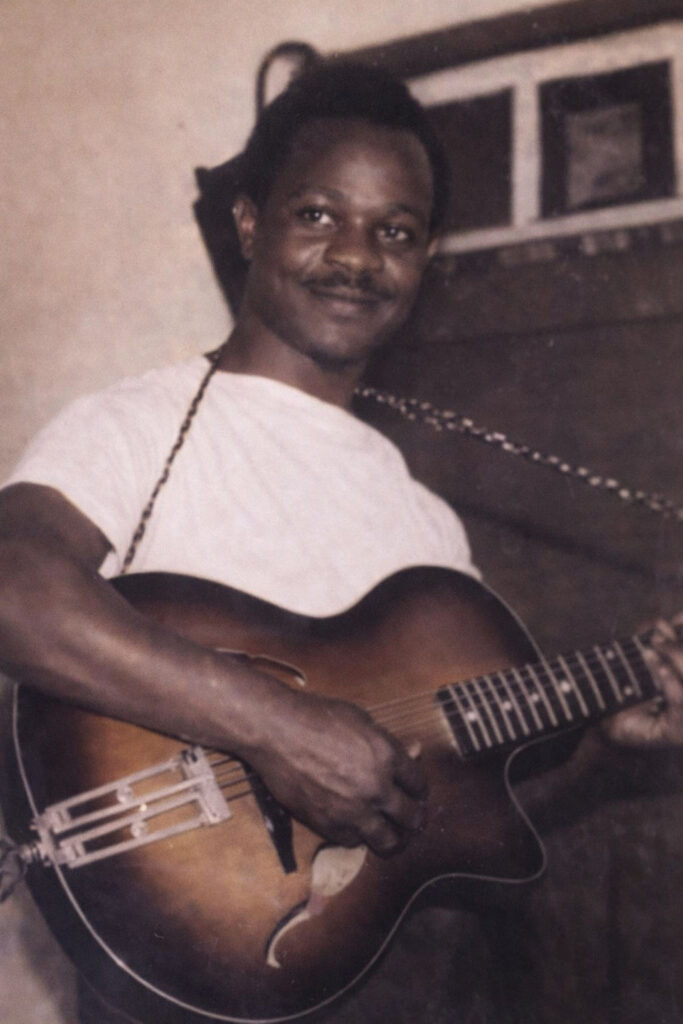
In 1964, after graduating as a Grade III tutor, he was posted to his alma mater, St. Luke’s School, Nembe, as a class teacher. He also established a High Life Band called Nembe Town Guitar Band, where he operated as the leader, song composer, and songster, providing the Nembe community with entertainment and recreation.
In 1967, he was at St. Paul’s School, Opolo town, as a teacher, but abruptly left for Lagos State due to the advent of the Nigerian Civil War (1967–1970).
During the Nigerian Civil War, Luke Oruwari was a teacher at St. Jude’s, Ebute-Metta, Lagos. He taught for a short period and left to attend to the affairs of his father’s demise and interment in Nembe town, Southern Nigeria.
As Headmaster
Again, from 1969 to 1970, he tutored at his alma mater, St. Luke’s School, Nembe, and in 1971 he was posted as Headmaster to St. Paul’s School, Okpoma. Afterwards, he was posted as Headmaster of Government School, Nembe, in 1972.
Subsequently, Luke Oruwari was upgraded to a tutor in the secondary school (Nembe National Grammar School) in late 1972.
After his graduation from the University of Ibadan, he was posted to Government Secondary School, Akassa, in Brass district in 1978 thereabout, a station generally acknowledged as a punishment ground in that part of the country, as a classroom teacher. Luke Oruwari was nicknamed “Idi Amin” because some misconstrued his modest disciplinary standards to mean high-handedness. It was later that such students continued to tender apologies to him. Nevertheless, both the school and the church there enjoyed his brief stay. He also helped the community acquire a small harmonium for their church.
As Principal
He was at Government Secondary School, Twon-Brass, as Principal. As the staff were inadequate, he served as the chief administrator, a classroom teacher, and music master.
In 1981, he was posted to Government Secondary School, Akabuka town in Ahoada Local Government Area, as Principal.
Inspector of Schools
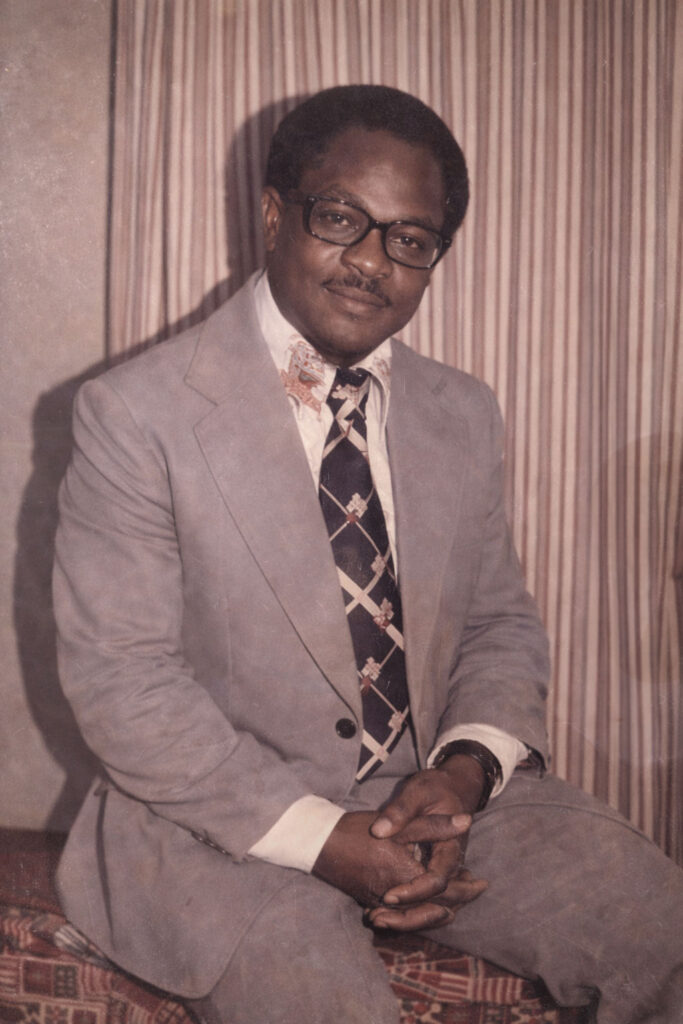
Luke Oruwari was moved from the school system to be an Assistant Inspector of Education at Eleme in 1983. In 1984, he was transferred to Nembe as Manager of Schools in the district. There too, he left no stone unturned in shedding the divine light.
After a brief posting at Government Secondary School, Okodi, in Ogbia Local Government Area, he was posted to Port Harcourt to serve as a substantive Inspector of Education in 1987.
As an Inspector of Education, he oversaw schools in several Local Government Areas, including Sagbama between 1988 and 1989, and Okrika between 1989 and 1990, where he established that office when the Local Government was newly created. Luke Oruwari’s attributes were greatly appreciated at these stations.
Retirement
In 1991, he was promoted to Deputy Director in charge of the Rivers State Scholarship Board, serving as Secretary and Sole Administrator.
Subsequently, Luke Oruwari retired meritoriously in December 1993 thereabout.
Nevertheless, he gained a contract appointment as a Music Instructor with the Rivers State College of Education (now Ignatius Ajuru University of Education), Port Harcourt, in 1996, and served there until his death.
His Songs
In 1997, it was in that fateful year that the essence of bridging the ugly gap caused by the lack of textbooks on singing in the educational industry nationwide dawned on him. So, he decided to take a prompt plunge to salvage the situation. Luke Oruwari succeeded in enlisting over 350 songs from his memory and other sources, and shared them into three groups: one for the Nursery level, another for the Primary level, and the largest for the Secondary level.
Book II was quite ready for printing, and Book I was in an advanced stage before he passed on. None of his proposed music books saw the light of day.
Some of his composed songs, mostly in the Nembe dialect, include: Kari Kari, Nembe Ini Ebiama, Wa Warim You Late, Nyanabo Nua, O Bow A Oboma, Kraist Bo Dite, Beria, Kraist Bo Kekiate, Osuote, Bomo Ila (Requiem for Sisi Comfort), Rev D. O. Ockiya, Sisei Ineke Sogio Bubarim Tiemo, Dau Ini Kio, Mi You Mi Kpomo Sie Mie, Alfa Na Omega Na, Opu Ayebabei, Kurami Atari Ma, Yelao-Ngu Sem Ghoe-Mie-Beba, Kurami A Tari Ma, Ani Ayeba Ekisem Temebra, Nyanabo Nua O, Kraist Bo Kekiate, Meseya Beibote, Miomungu Mi Kpomo Seimie, In’eki Sogio Inengi Irukami Tibi Mi Gho Tiemo, Obo Wa Obomo, Inie Mi Pa Inie, Wagi Digi, Beria, Miomungu Mi Kpomo Seimiebo, Suoteme Ayeba, Ayeba Nimi, Sogu Ifiemi, Ori Gelegugelegu Bo Bei, Wa Digieneni, Waekite, Wagi Digi, Ek In Ikio Pastor Ockiya, the Nigerian National Anthem, Kuro Pa Emi, Nembe Mi Ebi Ama, Wagibo, Kraist Dimi, Buna Fla, Inatimi, Wa Warimi, and A Pamieye Mieye.
The Places He Featured
Luke Oruwari performed as choirmaster/organist at the following places:
- St. Cyprian’s Church, Hospital Road, Port Harcourt
- St. Luke’s Church, Nembe
- St. Barnabas’ Church, Twon-Brass
- St. Matthew’s Church, Nkpolu, Port Harcourt
- Methodist Church, Harbour Road, Port Harcourt
- St. Peter’s Church, Okrika
- St. Peter’s Church, Yenagoa
He was the Music Director at St. Andrew’s Church, Diobu, Port Harcourt.
Nembe Choral Group
In 1989 thereabout, he organized a formidable choir in Port Harcourt named “Nembe Choral Society,” which performed his musical compositions on radio, television, in churches, and at several ceremonies.
His Chieftaincy
Firstly, in 1982, he received the second award of his life in his town (Nembe). In view of the countless contributions he had made to his father’s family, Yekorogha House of Isuokiri Nembe, he was installed as the Deputy Traditional Ruler of the house, titled Deputy Chief Yekorogha.
Then in 1997, in recognition of his great contribution towards the development of the Nembe community and the massive education of the youths all over, a chieftaincy title was conferred on him. Thereafter, he was addressed as “Chief Luke Tubo Martha Oruwari-Ombo.”
Luke Tubo Martha Oruwari’s Faith
Alabo Luke Tubo Martha Oruwari-Ombo was an Anglican until his transition. He never wavered in his belief in the Anglican Communion. Even on his sickbed, in a bad state of health, some confidants approached him to switch faith and get well again; he outrightly rejected the request and took his stance to die an Anglican.
His Family
Alabo Luke Tubo Martha Oruwari-Ombo was first married to the love of his life, Mrs. Famokumo Oruwari (née Olali), an able soprano singer, in 1971, and they both separated in the 1980s.
Afterwards, he remarried in 1988 thereabout to Clara Fedigha, had a son in 1989, and got separated again. Nonetheless, Alabo Luke Tubo Martha Oruwari-Ombo had three children.
His Death
Alabo Luke Tubo Martha Oruwari-Ombo took ill in 1993, just before he retired. He had chronic diabetes and was admitted at Opus Hospital, No. 8 Railway Close, D/Line, Port Harcourt.
On 19 October 2000, he died at the age of 61.