Opening Summary
The Tarakiri Kingdom stands as one of the enduring traditional polities of the Niger Delta, renowned for its resilience, cultural cohesion, and evolving system of leadership. Rooted in the legacy of the legendary ancestor Tarakiri Ondo, the kingdom has navigated centuries of migration, conflict, and political transformation while preserving its spiritual and cultural identity. From its early settlement at Obiama to the modern reign of contemporary monarchs, the Tarakiri people have remained united by shared heritage and institutions. Their history reflects a remarkable journey of survival, adaptation, and the continual strengthening of communal leadership.
Early Life and Origins
The Tarakiri people trace their ancestry to the legendary figure Tarakiri Ondo, whose descendants established one of the notable ethnic communities in the Niger Delta. The earliest known settlement of the Tarakiri people was Obiama, where the community flourished for generations.
This early homeland served as the spiritual and cultural center of the Tarakiri people until the upheavals of the Nigerian Civil War forced widespread displacement. During the war, many Tarakiri families were compelled to abandon their ancestral homes and migrate to safer areas across the central and western Niger Delta.
Despite this dispersion, the Tarakiri people maintained a strong sense of identity and cultural unity that transcended geographic boundaries.
Expansion and Settlement Across the Niger Delta
Following the disruptions of the civil war, the Tarakiri people gradually established new communities across several regions of the Niger Delta. In Southern Ijaw, settlements such as Ayanma, Diebou, Igeibiri, Obolori, Oweikorogha, and Ozuzubiri became thriving Tarakiri communities.
Further expansion occurred in Ogbia, where settlements including Ayanma-Ogbia and Emakalakala emerged. In the western Niger Delta, towns such as Agbere, Angalabiri, Bulou-Orua, Ebedebiri, and Toru-Orua became important centers of Tarakiri cultural life.
These communities collectively formed the broader territorial spread of the Tarakiri Kingdom, strengthening its cultural and political presence across the region.
The Establishment of the Pere: A Symbol of Unity
In the late nineteenth century, the Tarakiri people created the office of the Pere (King) as a unifying institution for the clan. The position of Pere carried both political and spiritual authority, as the monarch also served as the Chief Priest of the clan deity, Ogbesu.
This dual role fused governance with spirituality, reinforcing the traditional belief that leadership must embody both moral authority and communal stewardship.
The first individual to occupy this sacred position was Pere Kpadia Mein, who ascended the throne in 1911 as Pere Kpadia I. His reign provided stability and spiritual guidance for the Tarakiri people until his death in 1919.
Leadership Transitions and Chieftaincy Reform
Following the death of Pere Kpadia I, the Tarakiri Kingdom entered a prolonged interregnum between 1919 and 1934, during which the throne remained vacant. Colonial records from 1931 indicated that the clan had yet to appoint a successor.
During this period, the British colonial administration introduced the Native Authority system, appointing Chief Youmokode of Ebedebiri as the acting administrative head of the clan in 1930. After his death in 1933, his son Chief Zinne Yournokode assumed the position, though the royal stool remained unoccupied.
In 1960, the Tarakiri people undertook a major political reform through the Tarakiri Chieftaincy Declaration, which introduced an elective system of succession. Under this arrangement, kingmakers formed an electoral college responsible for selecting the Pere. This reform replaced hereditary succession with a more inclusive and democratic process.
The Era of Modern Pership
A new era began in 1963 with the election of Pere Odogu Kpadia III, the son of Pere Kpadia I. His reign symbolized the restoration of unity among the Tarakiri people and was officially recognized by the government of Mid-Western Nigeria in 1967. His leadership continued until his passing in 1976.
Subsequent years saw periods of succession disputes, particularly between 1979 and 1981, when rival claimants contested the throne. Eventually, Pere Julius Waridoubo Hobobo was recognized by the Rivers State Government in 1981, although his reign was short due to his death later that same year.
The kingdom entered another significant phase in 2000, when High Chief H. S. Eseimokumoh emerged as the first democratically elected Pere of Tarakiri following earlier reforms. His leadership marked a renewed commitment to participatory governance until his passing in 2012.
He was succeeded by Engr. Richard Orukaribai Koroye, whose reign from 2012 to 2022 brought continued stability and development before his death in October 2022.
Contemporary Leadership
In September 2023, the Tarakiri Kingdom welcomed a new monarch with the election and coronation of Dr. Seiyifa Koroye, a respected academic from Toru-Orua. His coronation on September 9, 2023, symbolized continuity in the kingdom’s tradition of leadership and the promise of renewed progress.
Across the Tarakiri cultural sphere, other traditional rulers have also contributed to leadership and community development. These include monarchs such as King George Deinkoru (Asene I), King E. B. Opulo (Asene II), King A. A. Taribi (Asene III), King Silas Dodo (Asene IV), King G. A. Week (Asene V), and King Oliolio Rufus Ibo (Asene VI) in Southern Ijaw communities.
In Patani, notable leaders include High Chief Roland Hitler Agboro, High Chief Akpolaotu Churchill Owoupele, and King Dr. Danladi Foubiri Owoupele (Angulu I).
Cultural Identity and Community Life
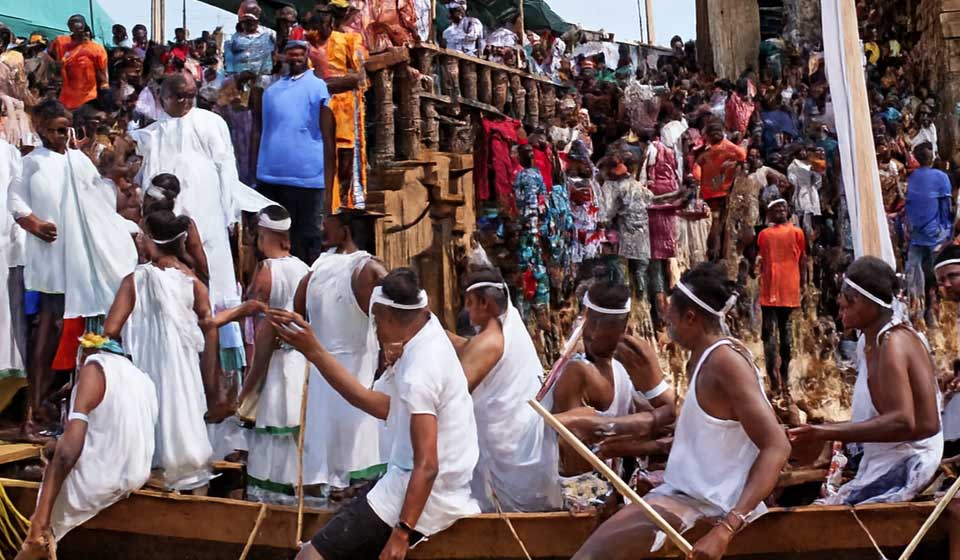
The Tarakiri people maintain strong cultural traditions rooted in communal solidarity, reverence for ancestral heritage, and devotion to traditional spiritual practices. The institution of the Pere continues to serve as a central symbol of unity, guiding both spiritual and political life within the kingdom.
Despite historical displacement and political transitions, the Tarakiri communities remain closely connected through shared customs, festivals, and governance structures.
Legacy and Impact
The history of the Tarakiri Kingdom is a powerful narrative of resilience, adaptation, and unity. From their ancestral homeland at Obiama to their widespread settlements across the Niger Delta, the Tarakiri people have preserved their identity through centuries of change.
The creation of an elective monarchy, the restoration of traditional leadership, and the continued emergence of respected rulers demonstrate a dynamic political culture rooted in tradition yet open to reform.
Today, under the leadership of Dr. Seiyifa Koroye, the Tarakiri Kingdom continues to honor its past while embracing new opportunities for development and cultural preservation.
The enduring story of Tarakiri remains a testament to the strength of community, the continuity of tradition, and the unbreakable bond between a people and their heritage.